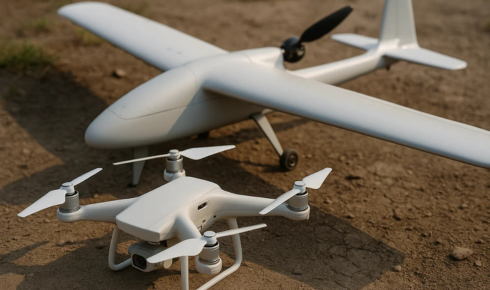
In the fast-evolving world of unmanned aerial vehicles (UAVs), the demand for durable, lightweight, and high-performance materials has never been greater. Whether used for defense, commercial operations, mapping, agriculture, or delivery services, UAVs rely heavily on materials and bonding agents that can withstand extreme environmental and mechanical conditions. This is where specialized adhesives and advanced resins become essential. From Epoxy Resin to urethane compounds and composite formulations, these materials contribute significantly to the strength, stability, and overall performance of UAV structures.
Why Adhesives Are Crucial for UAV Manufacturing
Traditional mechanical fasteners like bolts or rivets add unnecessary weight and can compromise the aerodynamics of UAVs. Adhesives, on the other hand, offer a seamless bonding solution that improves structural integrity while reducing overall mass. Adhesive technology also allows engineers to combine dissimilar materials such as metals, plastics, and composites without risk of corrosion or stress concentration.
Modern UAVs include critical components—airframes, wings, fuselage sections, rotor housings, and sensor mounts—that rely on resin-based adhesives for long-term reliability. These adhesives must tolerate vibrations, temperature fluctuations, and chemical exposure while maintaining stable mechanical properties throughout the flight cycle.
Applications and Advantages of Epoxy Resin in UAVs
Epoxy Resin is widely regarded as the backbone of aerospace bonding due to its exceptional mechanical strength, chemical resistance, and adhesion performance. It is commonly used to bond carbon fiber, fiberglass, Kevlar, aluminum, and other lightweight aerospace materials.
Its benefits include:
- High tensile and compressive strength
- Excellent fatigue resistance
- Strong bonding with composite materials
- Stability under thermal stress
- Minimal shrinkage during curing
Epoxies are primarily used in UAV wing structures, composite blades, interior panels, battery casings, and load-bearing joints. Their predictable curing behavior ensures consistent performance, which is critical for mission-critical drone applications.
How Urethane Resin Enhances Flexibility and Performance
Urethane Resin offers a unique set of properties that make it valuable for parts requiring flexibility, vibration absorption, and impact resistance. While epoxies offer rigidity, urethanes provide resilience, making them well-suited for potting compounds, electronic encapsulation, protective coatings, and flexible bonding applications.
Key advantages include:
- Superior impact resistance
- Resistance to abrasion and moisture
- Excellent electrical insulation for sensitive components
- Adjustable hardness based on formulation
For UAVs operating in rugged terrains, harsh climates, or high-impact scenarios (like delivery drones), urethane-based adhesives help protect integral components and electronics from damage.
Understanding Resin Equivalents in UAV Engineering
As the UAV industry grows, manufacturers often evaluate Resin Equivalents to find comparable options that match performance standards while reducing cost or improving sustainability. These equivalents are alternate formulations that offer similar curing behavior, mechanical strength, or bonding characteristics as established resins.
Resin equivalents are crucial when sourcing materials from multiple suppliers, developing region-specific production strategies, or adhering to industry regulations. Engineers examine various metrics—including viscosity, elongation at break, and thermal resistance—to ensure substitute resins deliver the same reliability as their primary counterparts.
Composite Resins: The Future of Lightweight UAV Structures
Composite resins have transformed UAV engineering by enabling the production of strong yet lightweight components. These resins bind reinforcement fibers such as carbon or glass, creating materials with exceptional strength-to-weight ratios. Composite resins also offer design flexibility, allowing manufacturers to mold complex shapes without compromising durability.
Some common uses include:
- UAV airframes and wings
- Propeller blades
- Antenna housings
- Payload compartments
- Reinforced joints and load-bearing structures
As UAV applications expand—from defense to last-mile delivery—composite resins continue to play a key role in improving efficiency and flight performance.
Final Thoughts
Advanced adhesive technologies are indispensable in modern UAV manufacturing. Whether relying on composite resins for lightweight strength or urethane formulations for flexibility and protection, the right resin system ensures long-term reliability and aerodynamic performance. By carefully selecting epoxy, urethane, or equivalent resin formulations, engineers can build UAVs that meet the demanding needs of today’s aerospace industry.