Category: Technology

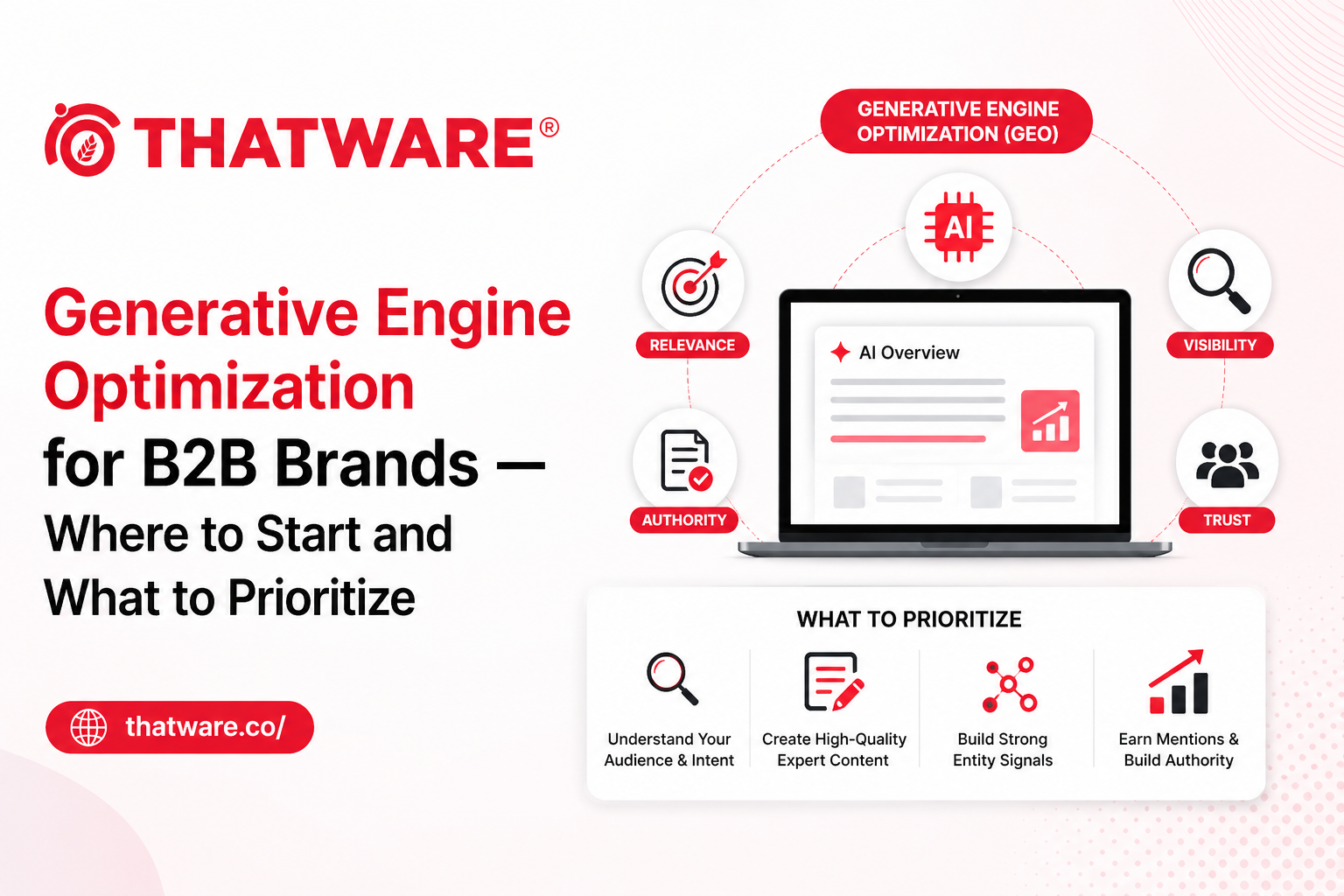
  • Generative Engine Optimization for B2B Brands — Where to Start and What to Prioritize

    Generative Engine Optimization for B2B Brands — Where to Start and What to Prioritize

    B2B brands have a specific GEO problem that consumer brands don’t face in quite the same way. The queries that matter most for B2B organic visibility are often complex, research-intensive, and comparison-heavy. “Best enterprise project management software for distributed teams” is not a query with a simple answer, and the AI-generated responses to queries like this are correspondingly nuanced, drawing on multiple sources and presenting synthesized evaluation rather than a simple recommendation.

    Getting cited in these synthesized B2B responses requires meeting a higher bar than appearing in a simple informational overview. The content needs to demonstrate genuine subject matter expertise, provide specific and credible information, and establish the brand as a trusted source in the evaluative context that B2B buyers are using AI search to navigate.

    This is harder than it sounds to do well, but it’s achievable with the right strategic prioritization.

    Why GEO Matters Differently for B2B

    B2B buying cycles are longer, involve more stakeholders, and involve more research than most consumer purchases. The AI search behavior that’s emerging in B2B reflects this. Buyers are using conversational AI tools to shortlist vendors, understand capability differences, get plain-language explanations of complex features, and sanity-check information they’ve gathered from other sources.

    The brand that shows up consistently in these AI-mediated research moments has a significant awareness and credibility advantage over the brand that doesn’t. And because B2B research happens repeatedly across a buying cycle, that consistent presence compounds across multiple touchpoints.

    The stakes in B2B GEO are higher than in many consumer categories because the value of a single converted customer is larger. If AI-mediated search is influencing which vendors make the shortlist for enterprise software purchases or professional service engagements, visibility in those AI responses has direct revenue implications.

    Generative engine optimization services for B2B brands need to be built around the specific query types and evaluation criteria that B2B buyers are using AI search to investigate.

    The Content Types That Get Cited in B2B AI Responses

    B2B AI-generated responses tend to draw on a few consistent content types, and understanding these shapes where to invest content resources.

    Comparison and evaluation content performs strongly in AI citation contexts. Content that specifically addresses how a product or service compares to alternatives, with specific criteria and honest assessment, is more likely to be drawn on for synthesized evaluation responses than promotional content that presents a one-sided view.

    Use case and application content is another strong performer. Content that specifically addresses which types of customers or situations a solution is best for, with concrete examples and specificity, answers the kinds of qualification questions that B2B buyers are asking AI tools. Generic content about a product category without this specificity gets passed over.

    Technical depth and specificity matter. B2B AI responses to technical questions tend to cite sources with genuine technical detail rather than high-level summaries. If your product documentation, technical blog posts, or implementation guides are more specific and accurate than competitors’, they’re more likely to be drawn on for technical queries.

    Original research and data get cited heavily. If your brand produces original research, surveys, or benchmark data about your industry, AI systems find this highly citable because it’s specific, verifiable, and not available elsewhere.

    Where to Start for B2B Brands

    The starting point for most B2B brands approaching GEO is an audit of which queries relevant to their category are generating AI Overview responses, what content is being cited in those responses, and how their own content compares to what’s being selected.

    This audit typically reveals a clear pattern. The content being cited tends to be more specific, more structured, and more directly responsive to the query than the brand’s existing content. The gap between what’s being cited and what the brand has is the optimization target.

    Geo optimization agency partners that understand B2B contexts can run this audit efficiently and prioritize which content gaps represent the highest-value optimization opportunities given the brand’s specific competitive situation.

    The Authority Dimension

    B2B GEO is not just about content quality. It’s also about source authority in the specific domain the query covers. An AI system synthesizing an answer about enterprise cybersecurity solutions is going to weight sources that are recognized as credible in that specific domain more heavily than sources with general domain authority.

    Building domain-specific authority for B2B GEO means being present and cited in the publications, communities, and knowledge sources that the AI systems recognize as authoritative for your specific category. This is where B2B digital PR intersects with GEO strategy.

    Getting the brand’s perspective and expertise featured in industry publications, analyst reports, and community discussions relevant to the specific topic area builds the authority signals that support AI citation selection.

    The Measurement Reality

    Measuring B2B GEO performance requires acknowledging that the tooling is still developing. The most reliable approach currently involves systematic manual monitoring of AI-generated responses for priority queries, tracking which sources are cited, and monitoring changes over time as content improvements are implemented.

    The business case for B2B GEO investment rests on the commercial value of the query types being targeted, not just the traffic volume. A brand that’s cited consistently in AI responses for enterprise software evaluation queries is influencing high-value purchase decisions even if the raw traffic numbers look modest compared to consumer categories.

    The investment in getting this right is justified by the commercial stakes, and those stakes are high enough in most B2B categories that early movers will have a meaningful and durable advantage over competitors who haven’t prioritized it yet.


  • Loyalty Gamification and the Rise of Gamified Loyalty Programs

    Loyalty Gamification and the Rise of Gamified Loyalty Programs

    In today’s highly competitive business world, brands are constantly searching for innovative ways to capture customer attention and encourage repeat engagement. One of the most effective strategies that has emerged in recent years is loyalty gamification. By incorporating elements of play, competition, and rewards into customer interactions, businesses can transform their loyalty systems into engaging experiences that keep customers coming back for more.

    Traditional loyalty programs often rely on points, discounts, or vouchers. While these incentives are effective to some extent, they can sometimes feel uninspiring and transactional. Modern consumers, especially younger generations, seek more immersive experiences. This is where a gamification loyalty program can make a real difference. By turning simple purchases and interactions into fun activities—such as completing challenges, leveling up, or unlocking badges—companies can create stronger emotional bonds with their audience.

    Why Gamified Loyalty Programs Work

    Gamified loyalty programs tap into the human desire for achievement and recognition. People enjoy challenges, milestones, and rewards beyond monetary benefits. For example, customers may be motivated to buy more frequently if they know they are just a few points away from reaching the next level or unlocking a special perk. This sense of progress and accomplishment drives repeat behavior.

    Another reason gamification is so effective is its ability to personalize the customer experience. Gamified platforms can be designed to offer rewards that align with individual preferences. This level of customization not only boosts engagement but also fosters long-term brand loyalty.

    Benefits of a Gamified Loyalty Program

    1. Higher Customer Engagement – Gamified systems encourage active participation, whether it’s through spinning a digital wheel, completing missions, or sharing achievements on social media.
    2. Stronger Emotional Connection – When customers feel like they are part of an interactive journey, they are more likely to associate positive emotions with the brand.
    3. Improved Retention Rates – Gamification keeps customers coming back, reducing churn rates and increasing lifetime value.
    4. Data Collection Opportunities – Businesses can gather valuable insights into customer behavior through participation patterns, helping refine future campaigns.
    5. Word-of-Mouth Marketing – Customers who enjoy interactive loyalty programs are more likely to share their experiences, bringing in new customers organically.

    Real-World Examples

    Many global brands have successfully adopted gamified loyalty strategies. Coffee shops, for instance, often use mobile apps where customers earn stars or badges for each purchase, with special bonuses unlocked after reaching certain milestones. Fitness brands encourage users to complete daily challenges, rewarding them with discounts or free products. Even airlines are enhancing frequent flyer programs with gamified elements like streaks and bonus missions.

    These real-world cases show that gamification is not just a passing trend—it is becoming a standard expectation in customer engagement strategies.

    Implementing Gamification Loyalty Strategies

    Businesses interested in adopting gamification should start by setting clear goals:

    • Do you want to increase purchase frequency?
    • Encourage social sharing?
    • Boost average order value?

    Next, design challenges and rewards that align with those goals. The program should be simple to understand but engaging enough to spark motivation. For example, levels and leaderboards can encourage competition, while surprise rewards can generate excitement.

    It’s also essential to integrate the program across both digital and physical touchpoints. Mobile apps, websites, and in-store experiences should all align seamlessly, ensuring customers enjoy a consistent and rewarding journey.

    The Future of Gamification Loyalty

    As technology evolves, gamification is expected to become even more immersive. Augmented reality (AR), artificial intelligence (AI), and blockchain are likely to play a significant role in shaping future loyalty systems. Customers may soon engage in virtual treasure hunts, earn tokenized rewards, or receive AI-driven personalized challenges.

    In conclusion, gamified loyalty programs are revolutionizing the way businesses connect with their customers. By blending fun, competition, and meaningful rewards, brands can create lasting relationships while standing out in crowded markets. As consumers increasingly expect experiences over simple transactions, companies that invest in gamification loyalty will be better positioned to thrive in the digital age.

  • Transform Your Energy Future with a Solar Power System and Solar Rooftop System

    Transform Your Energy Future with a Solar Power System and Solar Rooftop System

    In today’s fast-evolving world, energy demands are rising while natural resources are depleting. As a result, many individuals and businesses are turning toward renewable solutions like a solar power system to meet their energy needs sustainably. Solar energy, being abundant and clean, offers an effective way to reduce electricity costs while helping the environment. Among the various solar solutions available, the solar rooftop system has gained tremendous popularity due to its affordability and efficiency.

    What is a Solar Power System?

    A solar power system is a setup that converts sunlight into electricity using photovoltaic (PV) panels. These systems can be installed in homes, offices, schools, hospitals, and industrial facilities. Solar systems can either be connected to the grid (on-grid) or operate independently (off-grid), depending on the user’s requirements.

    Key components of a solar power system include:

    • Solar panels: Capture sunlight and convert it into DC electricity.
    • Inverters: Transform DC electricity into usable AC electricity.
    • Batteries (for off-grid systems): Store excess energy for use when sunlight is unavailable.
    • Mounting structures: Support the panels securely on roofs or ground spaces.
    • Monitoring systems: Track energy production and system performance.

    What is a Solar Rooftop System?

    A solar rooftop system is a type of solar installation where PV panels are mounted directly on the roof of a building. It’s an ideal solution for urban environments where open land is scarce. These systems can power residential homes, commercial buildings, and even large-scale industrial plants.

    There are two main types of rooftop systems:

    1. Grid-tied rooftop system: Connected to the local electricity grid, allowing excess power to be fed back, often leading to credits through net metering.
    2. Off-grid rooftop system: Independent from the grid, typically using battery storage for power supply during non-sunny hours.

    Advantages of Installing a Solar Power System

    Switching to solar energy offers numerous benefits, including:

    • Significant cost savings: Solar energy drastically reduces monthly electricity bills.
    • Energy independence: Protect yourself from rising energy costs and supply disruptions.
    • Environmentally friendly: Solar reduces carbon emissions and promotes a greener planet.
    • Government incentives: Avail subsidies, tax benefits, and easy financing options.
    • Increased property value: Solar installations can enhance real estate worth.

    Why Solar Rooftop Systems are the Future

    Solar rooftop systems are rapidly transforming cities by making use of otherwise unused roof spaces. Here’s why they are a game-changer:

    • Efficient space utilization: No need for extra land, making it perfect for urban areas.
    • Lower transmission losses: Being closer to the point of consumption, energy wastage is minimized.
    • Scalable solutions: Easily expand the system as your energy requirements grow.
    • Quick installation: Compared to other infrastructure projects, rooftop solar is fast and easy to set up.

    Things to Consider Before Installation

    Before setting up a solar rooftop system, you should keep a few important factors in mind:

    • Roof condition: Ensure your roof is strong and spacious enough to support panels.
    • Energy needs: Calculate your average monthly electricity usage to determine the size of the system.
    • Local regulations: Be aware of any municipal rules or permit requirements for solar installations.
    • Reputable installer: Choose a certified, experienced company for quality service and maintenance.

    Solar Energy and Government Support

    In many countries, including India, governments are promoting solar energy adoption through various schemes and financial incentives. Homeowners and businesses can benefit from subsidies on installation costs, tax credits, and easy loan options to make solar more accessible and affordable.

    Conclusion

    Switching to a solar power system and utilizing your building’s rooftop for solar energy generation is a smart and sustainable decision. It not only ensures energy savings but also contributes to a greener, healthier planet. With technology becoming more affordable and government policies favoring renewable energy, now is the perfect time to invest in a solar rooftop system. Make the change today and take a bold step toward a cleaner, brighter tomorrow!

  • Understanding Core Network 5G: Revolutionizing Connectivity

    Understanding Core Network 5G: Revolutionizing Connectivity

    The advent of 5G technology is poised to transform the way we connect, communicate, and interact with the world around us. One of the most critical components enabling this transformation is the 5G core network. This article explores the architecture, functions, and importance of the core network in 5G, shedding light on how it plays a pivotal role in delivering the high-speed, low-latency, and highly reliable services that 5G promises.

    What is the Core Network in 5G?

    The core network is a central part of a mobile network, handling all the essential tasks such as routing, managing traffic, and controlling communication sessions. It serves as the backbone of mobile services, and in the case of 5G, it plays a more crucial role than ever before.

    Unlike previous generations (4G and 3G), 5G introduces a more flexible, virtualized core network that can dynamically scale and adapt to the needs of modern users. This shift in architecture is designed to support a wide variety of use cases, from high-speed mobile broadband to massive machine-type communications (e.g., IoT) and ultra-reliable low-latency communications for applications like autonomous vehicles and remote surgeries.

    Key Features of Core Network 5G

    1. Network Slicing

    One of the standout features of the 5G core network is network slicing. This concept allows the creation of multiple virtual networks within the same physical infrastructure. Each slice can be customized for specific needs, providing tailored services to different industries, enterprises, or use cases. For example, one slice could be optimized for high-speed mobile internet, while another could be dedicated to mission-critical applications with ultra-low latency.

    2. Ultra-Low Latency

    5G networks are designed to deliver latency as low as 1 millisecond, a huge leap from the 30-50 milliseconds typical of 4G. This is particularly important for real-time applications such as virtual reality (VR), augmented reality (AR), and industrial automation, where even a slight delay can cause significant disruptions. The core network plays a pivotal role in achieving this by ensuring that data is processed and transmitted as quickly as possible.

    3. Edge Computing Integration

    The 5G core network incorporates edge computing, which brings computational resources closer to the data source. By processing data at the edge of the network, closer to the end user, 5G networks can minimize delays and reduce the load on central servers. This is especially important for applications that require real-time data processing, such as autonomous driving and smart cities.

    4. Cloud-Native Architecture

    Unlike traditional, hardware-based networks, the 5G core is built with a cloud-native architecture. This means that instead of relying on physical servers, the core network utilizes virtualized resources, enabling greater scalability, flexibility, and cost-effectiveness. Operators can quickly scale up or down based on demand, offering more efficient resource management.

    Components of the 5G Core Network

    The 5G core network is a highly sophisticated system composed of several key elements that work together to provide the desired services. Some of the main components include:

    1. Access and Mobility Management Function (AMF)

    The AMF is responsible for managing connections and mobility for user equipment (UE). It handles tasks such as registration, authentication, and session management. The AMF ensures that users can seamlessly connect to the network, regardless of their location, and supports the handover process when they move between cells or different network slices.

    2. User Plane Function (UPF)

    The User Plane Function (UPF) is the component that handles user data traffic. It ensures that data is transmitted between the user equipment and the internet or other services. The UPF also provides features such as traffic steering and Quality of Service (QoS) management, which helps prioritize certain types of traffic to maintain a high level of service.

    3. Session Management Function (SMF)

    The Session Management Function (SMF) manages the user sessions within the 5G network. It controls the allocation of resources, manages IP addresses, and coordinates the handover process when the user moves from one network slice or access point to another. The SMF works closely with the AMF and the UPF to ensure seamless connectivity and high performance.

    4. Policy Control Function (PCF)

    The Policy Control Function (PCF) is responsible for enforcing policies related to quality of service, charging, and network resource allocation. The PCF works by receiving requests from various network elements and deciding how resources should be allocated to different services or users. It plays a significant role in ensuring that network resources are utilized efficiently and that service levels are maintained.

    5. Network Function Virtualization (NFV)

    Network Function Virtualization (NFV) is a key concept in the 5G core network. It involves the use of software-based solutions to virtualize the functions traditionally provided by physical network devices, such as routers and switches. NFV enables the network to be more flexible and scalable, allowing operators to deploy services faster and at a lower cost.

    Why is the 5G Core Network Important?

    1. Enabling High-Speed, Low-Latency Services

    The core network in 5G is essential for delivering the high-speed, low-latency services that will power innovations across various industries. Whether it’s gaming, virtual reality, or healthcare, the 5G core ensures that data flows seamlessly and at lightning speeds, making previously unimaginable applications a reality.

    2. Supporting IoT and Massive Connectivity

    5G is designed to handle a massive number of connected devices, thanks to its ability to support massive machine-type communications (mMTC). The core network can manage the vast amounts of data generated by IoT devices, ensuring reliable connectivity and efficient traffic handling.

    3. Facilitating Network Automation

    The 5G core network enables operators to automate many aspects of network management. This includes automated network configuration, fault detection, and maintenance, which reduces the need for manual intervention. Automation also helps optimize network performance and ensures that services are delivered without interruption.

    4. Meeting the Demands of Future Technologies

    5G is more than just an upgrade over 4G; it is designed to support the technologies of tomorrow. From smart cities to autonomous vehicles, the core network’s ability to support high-bandwidth, low-latency applications makes it an essential part of realizing the full potential of emerging technologies.

    Challenges in Deploying 5G Core Networks

    While the potential of 5G core networks is immense, there are several challenges that need to be addressed before widespread deployment can occur:

    1. Infrastructure Costs

    Building the infrastructure for a 5G core network requires significant investment. While the technology offers long-term benefits, the initial costs can be prohibitive for many operators. Additionally, the need for dense deployment of base stations and edge computing nodes can increase the cost and complexity of 5G rollouts.

    2. Security Concerns

    With the increased number of connected devices and more critical services relying on 5G, security becomes a major concern. The core network must be designed with robust security mechanisms to prevent cyberattacks, ensure privacy, and protect sensitive data.

    3. Interoperability

    The transition from 4G to 5G will require interoperability between old and new network elements. Ensuring that legacy systems can seamlessly work with 5G infrastructure is crucial for a smooth migration and maintaining service continuity during the deployment phase.

    Conclusion: The Future of 5G Core Networks

    The 5G core network is the heart of the next-generation mobile network, enabling a new era of connectivity that will change how we interact with the world. From network slicing to edge computing, its advanced features offer a level of flexibility and scalability that was previously unimaginable. As 5G continues to roll out globally, the core network will play a pivotal role in supporting everything from high-speed mobile broadband to smart cities and autonomous vehicles.

    However, challenges such as infrastructure costs, security concerns, and interoperability will need to be addressed. Despite these hurdles, the future of 5G core networks is bright, and the technology will undoubtedly be the driving force behind the next wave of innovation in communications and beyond.

  • Exploring Tech Solutions in Fargo, North Dakota: From Computer Repair to Website Design

    Exploring Tech Solutions in Fargo, North Dakota: From Computer Repair to Website Design

    Introduction

    Fargo, North Dakota, is a hub for businesses and individuals seeking reliable tech solutions. From computer repair Fargo North Dakota to innovative services provided by companies like Dakota Technologies and Corporate Technologies, the region offers a variety of options for those needing assistance with technology. Additionally, businesses can find specialized services for website design, with web design Fargo companies offering cutting-edge solutions to enhance their online presence. This article delves into the top tech services in Fargo, including repair solutions, website design companies, and corporate technology providers.


    Computer Repair Fargo North Dakota

    For individuals and businesses alike, finding dependable services for computer repair Fargo North Dakota is essential. Whether you’re dealing with a hardware malfunction, software glitches, or cybersecurity threats, Fargo offers several trusted repair services to meet your needs.

    Local repair shops in Fargo pride themselves on fast turnaround times, knowledgeable technicians, and affordable pricing. Many of these businesses provide on-site services, remote troubleshooting, and maintenance plans to ensure your computer systems run smoothly. They cater to both individual users and businesses, offering solutions like data recovery, hardware upgrades, and virus removal. With their expertise, tech issues are resolved quickly, minimizing downtime and frustration.


    Dakota Technologies: A Pioneer in Innovation

    When it comes to advanced solutions and cutting-edge developments, Dakota Technologies is a prominent name in Fargo. This company focuses on delivering innovative technologies that benefit industries such as environmental services, analytics, and research.

    Known for their focus on precision and quality, Dakota Technologies has developed tools and technologies that address complex challenges in various fields. Whether it’s developing specialized software or providing environmental monitoring systems, this company ensures its clients stay ahead in a competitive market. Their expertise extends beyond typical tech services, making them a trusted partner for businesses in need of advanced technological support.


    Finding the Right Website Design Company Fargo

    In today’s digital age, having a professional and user-friendly website is crucial for any business. Fortunately, Fargo is home to several top-notch options for those seeking a website design company Fargo. These companies specialize in creating custom websites that not only look great but also perform well in search rankings and conversions.

    Web design firms in Fargo typically offer a full suite of services, including website development, search engine optimization (SEO), content management systems (CMS), and ongoing maintenance. These companies work closely with clients to understand their branding, target audience, and goals, ensuring the final product meets their needs.

    Whether you’re a small business looking for a simple, affordable website or a large corporation in need of a complex, e-commerce platform, a website design company Fargo can help. The focus on creativity and functionality ensures that your online presence reflects your business values and drives customer engagement.


    Corporate Technologies: A Leader in Business Solutions

    For businesses in Fargo seeking comprehensive IT solutions, Corporate Technologies stands out as a reliable partner. This company provides managed IT services, cloud computing solutions, and cybersecurity strategies to businesses of all sizes. Their team of experts works to streamline technology processes, reduce downtime, and improve overall efficiency.

    Corporate Technologies also offers data backup and disaster recovery services, ensuring that critical business information remains secure even in the face of unexpected challenges. By outsourcing IT management to companies like Corporate Technologies, businesses can focus on their core operations while enjoying the benefits of advanced technological support.


    Web Design Fargo: Elevating Online Presence

    The growing demand for professional web design Fargo services highlights the importance of a well-optimized website. From sleek designs to seamless navigation, web design companies in Fargo prioritize user experience and functionality. These firms also incorporate the latest trends in responsive design, ensuring websites perform well across all devices, from desktops to smartphones.

    In addition to visual appeal, web design Fargo services often include technical optimizations such as improving page load speeds, integrating analytics tools, and optimizing for mobile performance. These enhancements not only boost the user experience but also improve search engine rankings, helping businesses attract more traffic and generate leads.


    Conclusion

    Fargo, North Dakota, is a thriving center for technology services, offering solutions for everything from computer repair Fargo North Dakota to professional web design Fargo. Companies like Dakota Technologies and Corporate Technologies continue to lead the way in providing innovative solutions to businesses and individuals alike. Whether you’re looking to fix your computer, enhance your digital presence, or partner with a corporate IT provider, Fargo has the resources to meet your needs. Explore the options available and discover how these tech services can help you achieve your goals.

  • How to Choose the Right Invoice Payment Platform

    How to Choose the Right Invoice Payment Platform

    Are you a small business owner looking to streamline your invoicing and payment processing? Choosing the right invoice payment platform is crucial for the success of your business. With so many options available, it can be overwhelming to figure out which one is the best fit for your needs. In this article, we will discuss the key factors to consider 

    when selecting an invoice payment platform that works for you.

    Understanding Your Business Needs

    Before diving into the world of invoice software, take some time to assess your business’s specific requirements. Consider the volume of invoices you send out on a regular basis, the complexity of your billing system, and the types of payment methods you want to offer to your clients. Understanding your business needs will help you narrow down the options and choose a platform that aligns with your goals.

    Payment Processing Capabilities

    When evaluating different invoice payment platforms, pay close attention to their payment processing capabilities. Look for a platform that supports a variety of payment methods, including credit card payments, bank transfers, and online payment gateways. The ability to offer multiple payment options will make it easier for your clients to settle their invoices promptly, leading to improved cash flow for your business.

    Integration with Existing Systems

    If you already use accounting or finance management software, make sure the invoice payment platform you choose integrates seamlessly with your existing systems. This will help you avoid any compatibility issues and streamline your invoicing process. Look for platforms that offer easy integration with popular accounting software like QuickBooks, Xero, or FreshBooks.

    User-Friendly Interface

    Ease of use is another crucial factor to consider when selecting an invoice payment platform. Choose a platform that is intuitive and user-friendly, with a clean and organized interface. A user-friendly platform will not only make it easier for you to create and send out invoices but will also make it simpler for your clients to make payments online.

    Security and Compliance

    When dealing with sensitive financial information, security is paramount. Look for an invoice payment platform that prioritizes data security and compliance with industry regulations. Ensure that the platform uses encryption to protect your data and that it follows strict security protocols to prevent unauthorized access.

    Customer Support

    In the event that you encounter any issues or have questions about the platform, reliable customer support is essential. Choose an invoice payment platform that offers responsive customer support through multiple channels, such as phone, email, or live chat. Having access to knowledgeable support staff can help you resolve any issues quickly and minimize disruptions to your business operations.

    Conclusion

    Choosing the right invoice payment platform is a critical decision that can have a significant impact on your business finances. By considering factors such as payment processing capabilities, integration with existing systems, user-friendly interface, security, and customer support, you can select a platform that meets your needs and helps you streamline your invoicing process.

    In conclusion, taking the time to evaluate your business needs and compare different invoice payment platforms will ensure that you choose the right solution for your business. Whether you’re looking for a simple digital invoicing tool or a comprehensive finance management system, there is a platform out there that can help you streamline your billing process and improve your cash flow.

  • The Role of TypeScript in Modern Full Stack Development: Why You Should Learn It

    The Role of TypeScript in Modern Full Stack Development: Why You Should Learn It

    In recent years, TypeScript has emerged as a powerful tool in the world of full stack development, revolutionizing the way developers write and manage JavaScript code. As applications become increasingly complex, TypeScript offers a strong typing system, making code easier to read, maintain, and debug. Its rising popularity has led many educational programs to incorporate it into their curriculums. Whether you’re new to programming or looking to expand your skill set, enrolling in a full stack developer course that includes TypeScript can offer you a competitive edge in the job market.

    What is TypeScript and Why Is It Important?

    TypeScript is an open-source programming language developed by Microsoft. Essentially, it’s a superset of JavaScript, meaning it builds on top of JavaScript by adding optional static typing, interfaces, and other advanced features. This means you can still write JavaScript code within TypeScript, but you have the added benefit of type-checking, which helps catch errors early in the development process. As full stack applications grow in scale, using TypeScript can significantly improve code quality and reduce bugs.

    One of the essential benefits of TypeScript is its ability to enhance JavaScript’s readability and maintainability. For example, with TypeScript, developers can define specific kinds for variables, function parameters, and return values. This permits the development team to have a clear understanding of what kind of data each component is handling, making it easier to identify and fix issues. If you’re considering a full stack developer course, opting for one that covers TypeScript can provide you with the foundational knowledge to create more efficient, reliable, and scalable applications.

    TypeScript in Full Stack Development: Front-End and Back-End Applications

    TypeScript is widely used in front-end development, particularly with frameworks like Angular, React, and Vue.js. These frameworks benefit greatly from TypeScript’s type-checking features, which help developers detect errors at compile time rather than at runtime. By providing clearer and more descriptive error messages, TypeScript helps developers quickly identify issues, saving time and resources.

    On the back-end, TypeScript is commonly used with Node.js to build server-side applications. When used on both the front-end and back-end, TypeScript ensures consistency across the entire application, as developers can use the same type definitions throughout. This is useful for larger teams, as it reduces the likelihood of miscommunication and mismatched data structures between different parts of the application.

    If you’re interested in mastering these aspects of TypeScript, a comprehensive full stack developer course can equip you with the necessary skills. Many such courses emphasize practical applications, allowing students to build full stack projects using TypeScript, which reinforces key concepts and techniques essential for modern development.

    Why TypeScript is Ideal for Large-Scale Applications

    As applications grow in complexity, the benefits of TypeScript become even more apparent. Large-scale applications often have multiple developers working on different parts of the codebase, which can lead to challenges in maintaining code quality and consistency. TypeScript’s static typing makes it easier to manage these large codebases, as developers can quickly understand the types of data being used and avoid unintended errors.

    Moreover, TypeScript’s integration with modern Integrated Development Environments (IDEs) provides powerful autocomplete features and code navigation tools, further streamlining the development process. For those who aim to work on enterprise-level projects, learning TypeScript through a full stack course in hyderabad can provide hands-on experience in developing scalable applications, making it a valuable skill for both aspiring and experienced developers.

    TypeScript’s Compatibility with JavaScript Ecosystems

    One of the reasons TypeScript has become so popular is its compatibility with existing JavaScript libraries and frameworks. Developers can gradually introduce TypeScript into a JavaScript project, allowing for a smoother transition. This flexibility makes it easy to integrate TypeScript into legacy systems, enabling businesses to improve their codebases without requiring a complete rewrite.

    Additionally, TypeScript’s support for ES6 and beyond means that developers can use the latest JavaScript features, such as async/await, modules, and destructuring, while still benefiting from TypeScript’s type safety. This combination of flexibility and modernization makes TypeScript a go-to choice for teams looking to future-proof their applications. If you’re in a tech-savvy city like hyderabad, finding a full stack course in hyderabad that covers TypeScript can open doors to job opportunities that require knowledge of both JavaScript and TypeScript, setting you apart in a competitive market.

    How TypeScript Enhances Collaboration in Development Teams

    Collaboration is a crucial element in full stack development, particularly for teams working on complex applications. TypeScript facilitates collaboration by making the codebase more predictable and easier to understand. When each team member adheres to TypeScript’s strict typing conventions, it becomes easier to manage dependencies and ensure that the code functions as expected.

    Furthermore, TypeScript’s modular structure allows developers to break down their applications into smaller, reusable components. This modular approach not only aids in code organization but also enables different team members to work on individual components without affecting the entire system. As a result, development teams can achieve faster turnaround times and more efficient workflows.

    For those considering advancing their skills, a full stack developer course that focuses on team-based projects using TypeScript can offer invaluable experience. Such courses often include real-world scenarios where students collaborate to build projects, providing insights into how TypeScript can streamline teamwork and improve overall productivity.

    Career Advantages of Learning TypeScript in Full Stack Development

    TypeScript’s rising popularity has made it a sought-after skill in the job market. Companies are seekingn developers who can work efficiently with TypeScript, as it helps reduce technical debt and improve code maintainability. Mastering TypeScript can also make it easier to learn other statically typed languages, such as Java or C#, as the concepts are similar.

    By enrolling in a full stack course in hyderabad, you can gain hands-on experience with TypeScript, preparing you for roles that require knowledge of both front-end and back-end technologies. hyderabad’s thriving tech ecosystem, with its abundance of software companies and startups, provides ample opportunities for full stack developers who are well-versed in TypeScript. Many local courses offer internship placements or project collaborations, giving you the chance to apply TypeScript skills in a real-world setting and boost your employability.

    Conclusion: Embracing TypeScript as a Modern Full Stack Developer

    In conclusion, TypeScript has proven to be a game-changer in full stack development, offering a range of benefits from improved code readability to enhanced collaboration. As the demand for scalable and efficient applications grows, TypeScript’s role in modern development is likely to expand, making it an essential skill for developers to learn.

    For anyone looking to build a career in full stack development, enrolling in a developer course that includes TypeScript can provide a solid foundation and a competitive edge. Moreover, tech-focused cities like hyderabad offer excellent learning environments, with access to a full stack course in hyderabad providing not only theoretical knowledge but also practical, hands-on experience. By embracing TypeScript, you’ll be well-equipped to tackle the challenges of modern full stack development and contribute to high-quality, scalable applications.

    Contact Us:

    Name: ExcelR – Full Stack Developer Course in Hyderabad

    Address: Unispace Building, 4th-floor Plot No.47 48,49, 2, Street Number 1, Patrika Nagar, Madhapur, Hyderabad, Telangana 500081.

    Phone: 087924 83183

    Visit Us: https://maps.app.goo.gl/u6WU2v4WcLsrSnMh9

  • The Importance of Steering Roaming: A Guide to Navigating the Digital Landscape

    In today’s interconnected world, roaming has become an integral part of our lives. Whether it’s for business trips, vacations, or simply staying connected while on the move, the ability to access the internet and make calls from anywhere is essential. However, with the increasing number of roaming options available, it’s crucial to understand the importance of steering roaming to ensure a seamless and cost-effective experience.

    What is Steering Roaming?

    Steering roaming is the process of intelligently selecting the most optimal network for your device to connect to while traveling. This involves factors such as signal strength, network coverage, and roaming costs. By effectively steering roaming, you can avoid excessive data charges, ensure reliable connectivity, and optimize your overall mobile experience.

    Why is Steering Roaming Important?

    Cost Savings: One of the primary benefits of steering roaming is the potential for significant cost savings. Different networks offer varying roaming rates, and by selecting the most affordable option, you can avoid unexpected charges on your bill. Additionally, some networks may have specific roaming plans or promotions that can further reduce costs.

    Improved Connectivity: Steering roaming helps to maintain a stable and reliable connection while traveling. By choosing a network with strong coverage in your location, you can minimize dropped calls, slow internet speeds, and other connectivity issues. This is particularly important for business travelers who rely on a consistent connection for work.

    Data Optimization: Roaming can quickly consume data, especially when streaming videos, downloading large files, or using data-intensive apps. By steering roaming to a network with favorable data rates and usage limits, you can avoid exceeding your data allowance and incurring additional charges.

    Enhanced Security: Steering roaming can also play a role in protecting your device and personal information. By selecting reputable networks, you can reduce the risk of connecting to unsecured or compromised networks that may pose security threats.

    How to Steer Roaming Effectively

    Check Your Carrier’s Roaming Plans: Before traveling, familiarize yourself with your carrier’s roaming options and associated costs. Some carriers offer international roaming plans that provide a fixed data allowance and call minutes at a predetermined rate.

    Use a Roaming App: Many carriers and third-party providers offer roaming apps that can help you manage your roaming usage and select the most optimal network. These apps often provide real-time information on network coverage, roaming rates, and usage alerts.

    Be Mindful of Data Usage: While traveling, be mindful of your data usage to avoid excessive charges. Consider turning off data roaming when not in use, using Wi-Fi whenever possible, and limiting data-intensive activities like streaming or downloading.

    Check for Network Availability: Before arriving at your destination, research the available networks and their coverage areas. This information can help you plan your roaming strategy and select the most suitable network.

    By understanding the importance of steering roaming and implementing effective strategies, you can enjoy a seamless and cost-effective mobile experience while traveling. Whether you’re exploring a new city or working remotely, steering roaming empowers you to stay connected and make the most of your adventures.

  • Advancements in Micro Electron Diffraction Analysis for Pharmaceutical Applications

    Advancements in Micro Electron Diffraction Analysis for Pharmaceutical Applications

    In the pharmaceutical industry, the development and optimization of drug formulations require precise analytical techniques. Among these, micro electron diffraction (MicroED) analysis has emerged as a game-changing tool. This technique is especially useful in solving the atomic structures of small molecules and pharmaceutical compounds, providing a high level of accuracy when conventional methods might fall short.

    Micro electron diffraction analysis is particularly valuable for examining tiny crystals that are difficult to study using traditional X-ray diffraction methods. By utilizing an electron beam, MicroED provides structural insights into minute samples with enhanced resolution, offering a new way to determine the molecular structure of drug compounds. This level of detail is crucial in the drug development process, where the molecular arrangement affects the efficacy and safety of the final product.

    Pharmaceutical Applications of MicroED

    MicroED is increasingly becoming a preferred method in the pharmaceutical field due to its ability to analyze very small crystals that are difficult to assess by other means. The high resolution and sensitivity of this technique enable the detection of minute changes in crystalline structures, which can be vital in understanding the stability, solubility, and bioavailability of a drug.

    For instance, MicroED is extensively used in salt screening during drug formulation. Salt screening involves selecting the optimal salt form of a drug compound to improve its properties, such as solubility or stability. The ability of MicroED to provide detailed structural information allows pharmaceutical companies to evaluate various salt forms quickly and efficiently. This accelerates the drug development process and ensures that the chosen salt form enhances the drug’s performance.

    Crystallinity Detection and Method Development

    Crystallinity plays a significant role in drug formulation. It refers to the degree of structural order in a solid substance. A compound’s crystallinity affects its dissolution rate, stability, and overall effectiveness in the human body. Detecting and understanding crystallinity is thus a critical step in the pharmaceutical development process.

    Traditional crystallinity detection methods, such as X-ray diffraction, often require large samples. However, MicroED enables the detection of crystallinity in much smaller samples, making it a preferred choice for pharmaceutical research. This advanced technique can help in the method development of crystallinity detection, providing more accurate and detailed information about the crystalline or amorphous state of a compound. This information is essential when developing new drugs, as it directly influences how the drug behaves in the body.

    MicroED also aids in the development of methods for detecting crystallinity in combination with other techniques, such as powder X-ray diffraction and differential scanning calorimetry. Together, these methods provide a comprehensive understanding of a drug’s crystalline or amorphous nature, allowing pharmaceutical companies to make informed decisions about formulation strategies.

    Amorphous Solid Dispersion Development

    In some cases, drug compounds may exhibit poor water solubility, which can limit their bioavailability. One approach to overcoming this challenge is the development of amorphous solid dispersions (ASDs). In an ASD, the drug is dispersed in an amorphous form within a solid matrix, enhancing its solubility and, consequently, its bioavailability.

    MicroED plays a critical role in amorphous solid dispersion development by helping researchers understand the molecular structure of the drug in its amorphous form. Since the amorphous state lacks the long-range order found in crystalline materials, traditional techniques such as X-ray diffraction may not be as effective in analyzing these structures. MicroED, however, can provide the necessary structural information to assess the stability and performance of ASDs. This is essential for ensuring that the drug remains stable in its amorphous form and that its enhanced solubility translates into improved therapeutic outcomes.

    The use of MicroED in ASD development allows for more precise control over the manufacturing process, as well as better predictions of the drug’s performance once it enters the human body. This can significantly reduce the time it takes to bring new drugs to market, ensuring that patients receive effective treatments more quickly.

    GMP NMR Release Testing in Pharmaceuticals

    Good Manufacturing Practice (GMP) is a set of guidelines designed to ensure that pharmaceutical products are produced consistently and with the highest quality standards. As part of these guidelines, analytical testing plays a crucial role in ensuring that drug products meet the necessary specifications before being released to the market.

    One such analytical method is GMP NMR release testing, which uses Nuclear Magnetic Resonance (NMR) spectroscopy to verify the chemical composition of a drug product. NMR testing provides detailed information about the molecular structure and purity of a compound, making it an invaluable tool for quality control in the pharmaceutical industry.

    GMP NMR release testing is particularly important for ensuring that the final drug product contains the correct active pharmaceutical ingredients (APIs) in the right quantities and that there are no contaminants or impurities. By integrating NMR testing into the drug release process, pharmaceutical companies can ensure that their products meet regulatory requirements and deliver the intended therapeutic effects to patients.

    The Future of MicroED and Pharmaceutical Testing

    As the pharmaceutical industry continues to evolve, the need for more precise and efficient analytical methods will only increase. MicroED offers a promising solution to many of the challenges faced in drug development, from salt screening to amorphous solid dispersion development. Its ability to provide high-resolution structural information on small samples makes it a powerful tool for pharmaceutical research and development.

    Additionally, the integration of techniques like GMP NMR release testing ensures that drug products are of the highest quality before they reach consumers. Together, these advanced analytical methods are paving the way for more efficient drug development processes and higher-quality pharmaceutical products.

    In conclusion, the combination of micro electron diffraction analysis, pharmaceutical salt screening, crystallinity detection method development, amorphous solid dispersion development, and GMP NMR release testing is revolutionizing the way drugs are developed and tested. These cutting-edge technologies are ensuring that new drugs are not only effective but also meet the highest standards of quality and safety.

  • Elevate Your Brand with Custom Business Design: Sydney’s Leading Web Design Company

    Elevate Your Brand with Custom Business Design: Sydney’s Leading Web Design Company

    For the contemporary economy that is dominated by digital communication, your website can become the only interface through which potential consumers will interact with your company. Competition has never been stiffer and therefore having a plain vanilla looking website just doesn’t pass the muster. Sydney businesses are increasingly resorting to custom web design to come up with distinctive and fantastic ways of relating to their target customers. It is not about having a ‘pretty face’ for a business’s web image but about the ability to have that image and have people get what you offer at first glance. In this article, we will discuss how custom business design is vital and how the leading web design company of Sydney can change your brand.

    That is why we have made Custom Business Design matter with respect to one of them.

    First Impressions Count

    First of all, your website is the initial step that the potential client takes and the first step is always extremely important. It is understandable that users decide about your website within the first seven seconds. A website, especially one created from scratch for your business, that is branded, has an ergonomics-friendly structure and design will keep your visitors glued to your site longer and more likely to patronize your business.

    Made To Match Your Brand

    It’s a fact: every business is special in its own way, and each has a story, a mission, and a personality of its own; your website should tell it. A custom web design enables the user to balance every aspect of the website in regard to the brand image. Any or even all of it as the color scheme, and the type of fonts, the way a page is arranged and even the content to be posted follows the brand’s personality. This type of singularity aids in creating the image and the necessary level of trust in the identified audience.

    Improved User Experience

    The user experience or the user- friendly aspect as it is often called is one of the most important aspects that determine the success of a website. This generally means a site design can be tweaked and tailored to meet the needs of the specific user in an organisation that is targeted. This way, you can make sure that your website is easy to navigate, fast in terms of loading time and provides a seamless experience irrespective of the gadget type. It can help you engage users more, decrease bounce rates and ultimately make more conversions due to the user-centric approach.

    SEO Benefits

    Custom web development is not strictly limited to the graphical and interface aspect of your website but also the internal side of the site as well. A well designed and developed custom website is designed and developed for looking into the various aspects of SEO. Sydney’s web design solutions employ professional SEO consultants to ensure that your site is properly geared towards making it easier forGoogle to index and rank it. Sometimes, there are impressive increases in the web traffic leading to higher conversion rates and more sales.

    Scalability for Business Growth

    Your website must also grow as your business expands because it could be one of the key reasons customers visit your business. When the business is growing, it will be helpful to have a custom built in website as it can be easily updated and expanded. Whether you require inclusion of catalog, addition of new service pages, or the expansion to new markets, a custom made website design is able to grow with your business.

    Why Partner with Sydney’s Top Web Design Company for a Custom Solution?

    This means that whenever you consign your project to Sydney’s leading web design company you are assured of availing a made to order product that meets your specific needs. Here’s why they stand out:Here’s why they stand out:

    Having a well-developed and Professional Custom Web Development service.

    Incorporating the services of a professional web design company gives one the leverage of a troop of experience in web design companies specializing in custom website development. They know how to design the Websites which are not only beautiful for view but also comfortable, good for using, and responsive. Our team of designers, developers, and UX/DX specialists create a website that brings tangible value to your business.

    Special Products that are Customized to Represent Your Business

    The best web design companies in Sydney dedicate their time to ensure that they know more about your brand, your business goals, or even your target market before they start the process of designing your website. Unlike other firms that use templates to design your parcel, they design parcels that are as unique as the business you are running. If you prefer a more or less hi-tech look and feel with your brand new site, their team will create a site that would indeed be a perfect reflection of it.

    Full-Service Capabilities

    Starting from a simple idea and ending by constant maintenance, the best Sydney web design agencies provide all the necessary solutions. This ranges from building websites for business or organizations, search engine optimization, writing and posting content, internet marketing. This provides you with a full service that not only designs your site to look good, but also to make sure the site runs effectively and is growing at the right pace.

    Results-Driven Approach

    This is not to say that custom web design is just about making a expo website functional — it is about making the expo website work. They work on the principle of coming up with new designs that will in one way or the other attract the target traffic, convert them to customers and offer leads. Another way they employ to optimize your site is through incorporating the strategies of website design that are compatible with the general objectives of your business.

    Ongoing Support and Maintenance

    Your website is a long-term investment and this means that you will be required to keep on supporting it for sometime. The top web design agencies provide support and maintenance services so that your site is updated regularly, safeguarded against security threats and performing efficiently.

    Elevate Your Brand Today

    More than ever before, a custom built website has become mandatory for any business that is operating in a competitive landscape. COAM Custom business design enables you to tailor its implementation to set goals and objectives, get your prospects’ attention and produce the desired effect. With the help of Sydney’s leading web design company you get the knowledge, imagination, and experience required to make your web presence and your brand unique and stand out.

    Whether you own a start up company that wants to expose its services and products to a larger client base or an experienced company that wants to remodel its online page, custom web design is one decision that is worth making in the long run. Contact us today and be among the clients to have a customized website that enhances your business.

  • In-Depth Anycubic Kobra 2 Review: Is It Worth the Hype?

    In-Depth Anycubic Kobra 2 Review: Is It Worth the Hype?

    Are you in the market for a new 3D printer and considering the Anycubic Kobra 2? Look no further! In this in-depth Anycubic Kobra 2 review, we will dive into all the features, performance, and value this printer has to offer. Whether you’re a seasoned pro or just starting out in the world of 3D printing, we’ll help you determine if the Anycubic Kobra 2 is worth the hype.

    Introduction to the Anycubic Kobra 2

    The Anycubic Kobra 2 emerges as a cutting-edge contender in the realm of 3D printing, building on the reputable foundation laid by its predecessors. This model boasts an array of impressive enhancements, geared towards streamlining the printing process for users of all levels. Among its notable advancements are the integration of a dual extruder system and an expansive build area, setting a new benchmark for versatility and efficiency in printing tasks. As we delve deeper into the capabilities and performance of the Kobra 2, we’ll explore how these features contribute to its potential to transform your 3D printing experience.

    Design and Build Quality

    The robust construction of the Anycubic Kobra 2 is a testament to its quality. Crafted from premium materials, it ensures both stability and accuracy during the printing process. The integration of a dual extruder system not only enhances the versatility of printing options but also upholds the precision of every print. This, coupled with a generously sized build area, accommodates a wide array of project sizes while maintaining exceptional print fidelity. The attention to detail in the design of the Kobra 2 underscores its commitment to providing a high-caliber printing experience for users across the board.

    Setup and Ease of Use

    Getting the Anycubic Kobra 2 up and running is straightforward, making it an ideal choice for both novices and seasoned 3D printing enthusiasts. The printer arrives partially assembled, simplifying the initial setup process. Users will appreciate the intuitive touchscreen interface, which facilitates effortless navigation through various settings and controls. Moreover, the auto-leveling feature plays a crucial role in maintaining consistent print quality, automatically adjusting the print bed to the optimal height. This combination of easy assembly, straightforward controls, and automated adjustments significantly enhances the overall user experience, allowing for a focus on creativity rather than cumbersome setup procedures.

    Printing Performance and Quality

    The Anycubic Kobra 2 impresses with its ability to deliver exceptionally detailed and crisp prints that surpass expectations. Leveraging its advanced dual extruder system, it achieves faster print speeds without sacrificing the intricacy or clarity of designs. Users will find themselves able to produce everything from delicate miniatures to robust functional parts with a precision that highlights even the smallest details. The machine’s optimized performance ensures minimal layer visibility, contributing to the professional-grade quality of the output. This level of fidelity in printing underscores the Kobra 2’s capability to meet diverse project requirements with ease.

    Software and Connectivity

    Navigating through the technological aspects, the Anycubic Kobra 2 distinguishes itself with its expansive compatibility across various slicing software platforms, such as Cura and Simplify3D. This adaptability ensures users have the freedom to work with tools that align with their project needs and expertise level. Beyond software flexibility, the Kobra 2 enhances its usability through multiple connectivity options, including Wi-Fi and USB. This array of connections enables a smooth transition of designs from digital sketches to physical creations, ensuring a streamlined workflow for users. The integration of these features facilitates a more efficient and user-centered printing process, emphasizing the printer’s dedication to accommodating a wide range of user preferences and technical setups.

    Price and Value for Money

    When considering the cost, the Anycubic Kobra 2 positions itself as an attractively priced mid-range option within the competitive landscape of 3D printers. Its financial outlay is justified through the delivery of robust features and reliable performance that stand out in its price bracket. For enthusiasts, educators, and professionals alike, the investment in a Kobra 2 translates to access to advanced printing capabilities without breaking the bank. The printer’s durable build, coupled with its ability to produce detailed and high-quality prints, further elevates its appeal as a cost-effective solution for a broad spectrum of printing needs. This blend of affordability and functionality makes the Kobra 2 a compelling choice for those seeking to maximize their return on investment in the realm of 3D printing.

    Pros and Cons

    • The dual extruder system enhances the printer’s ability to manage multi-color and multi-material projects efficiently, expanding creative possibilities.
    • Constructed with high-quality materials, the Kobra 2 ensures stability and longevity, making it a dependable choice for various printing needs.
    • Its intuitive touchscreen interface simplifies the user experience, offering easy access to settings and controls which streamlines the printing process.
    • The Kobra 2 is designed to achieve fast print speeds while maintaining the quality and detail of the output, catering to both rapid prototyping and intricate models.
    • Offers broad compatibility with major slicing software and flexible connectivity options, including Wi-Fi and USB, facilitating a seamless workflow from design to print.
    • The provided build volume may not suffice for users looking to undertake larger scale projects, limiting the scope of potential applications.
    • Initial setup and calibration might pose a slight challenge to some users, necessitating adjustments to achieve the desired print quality.

    Conclusion: Is the Anycubic Kobra 2 Worth It?

    Evaluating the Anycubic Kobra 2, it stands out as a formidable option in the 3D printer market, marrying affordability with a suite of advanced features. It caters effectively to a diverse audience, from hobbyists to professionals, offering ease of use through its intuitive design and ensuring high-quality output with its sophisticated dual extruder system. Despite some limitations in build volume and initial calibration, the Kobra 2’s overall performance and value proposition make it a compelling purchase. For those seeking a blend of innovation, efficiency, and economic viability in a 3D printer, the Anycubic Kobra 2 presents a convincing case.

  • Developing a Strong Brand Identity in a Competitive Market

    Developing a Strong Brand Identity in a Competitive Market

    In today’s crowded marketplace, carving out a unique brand identity is more crucial than ever. I’ve seen countless businesses struggle to stand out amidst the noise, but those that succeed share one common trait: a strong, distinctive brand identity. It’s not just about a catchy logo or a memorable tagline; it’s about creating an emotional connection with your audience.

    A well-crafted brand identity does more than just attract attention—it builds trust and loyalty. When customers recognize and resonate with your brand, they’re more likely to choose you over competitors. 

    So, how do you develop a brand identity that not only captures attention but also fosters a lasting relationship with your audience? Let’s dive into the key elements that make a brand truly unforgettable. Let’s dive into the key elements that make a brand truly unforgettable, such as offering innovative products like those available at WWW YU, which can help differentiate your brand and attract a loyal customer base.

    Understanding Brand Identity

    Brand identity represents how a brand presents itself to the public. It encompasses visual elements like logos and colors, as well as messaging and tone. A cohesive brand identity ensures consistency across all channels, reinforcing recognition and trust.

    Visual elements play a crucial role in brand identity. These include the logo, color scheme, typography, and imagery. For instance, renowned brands like Apple and Nike have distinct logos that are instantly recognizable globally.

    Messaging shapes the narrative of a brand’s identity. It comprises the voice, tone, and language used in communications. For example, a formal tone suits luxury brands, while a casual tone fits lifestyle brands. Clear, consistent messaging helps convey the brand’s values and mission effectively.

    Consistency across platforms strengthens brand identity. Uniform visual elements and messaging in advertisements, social media, and packaging create a unified brand experience. This consistency engenders trust and loyalty among consumers.

    Brand identity also involves the emotional connection with the audience. Effective branding evokes specific feelings and perceptions, aligning with the target audience’s values and desires. For example, eco-friendly brands appeal to environmentally-conscious consumers by emphasizing sustainability.

    Understanding brand identity is essential for standing out in a crowded market. It is not just about aesthetics; it’s about creating a compelling and cohesive presence that resonates with the audience and builds lasting relationships.

    Importance of a Strong Brand Identity

    A strong brand identity sets a business apart from competitors. It ensures customers can easily recognize and remember the brand, which boosts loyalty and trust.

    Recognition plays a critical role in marketing strategies. When consumers can identify a brand’s logo, colors, and messaging, it increases the chances they’ll choose that brand over others. Kohl’s found that consistent presentation of a brand can increase revenue by 33%.

    Trust is another component influenced by brand identity. When brands present themselves consistently across various channels, it shows reliability. According to Edelman’s Trust Barometer, 81% of consumers say trust in a brand is a deciding factor in their purchasing decisions.

    Emotional connection is fostered through a robust brand identity. Brands like Nike and Apple create deep emotional bonds with their audience by aligning their identity with customer values. This connection often leads to higher customer retention and brand advocacy.

    Differentiation in a crowded market is achieved through a unique brand identity. By clearly establishing what a brand stands for, businesses can effortlessly stand out. For instance, TOMS Shoes differentiates by focusing on social responsibility, attracting like-minded consumers.

    Ultimately, developing a strong brand identity is crucial for businesses aiming to make a significant impact. It encompasses recognition, trust, emotional connection, and differentiation, all of which are pivotal in forming lasting customer relationships and achieving sustained success.

    Key Elements of Brand Identity

    Establishing a strong brand identity relies on several key elements. These components shape how customers perceive your brand in a crowded market.

    Logo Design and Visual Elements

    A brand’s logo and visual elements are the first things customers notice. The logo encapsulates the brand’s essence in a single graphic. Selecting colors, fonts, and imagery consistent with your brand’s values enhances recognition. For instance, companies like Apple use minimalist designs to convey innovation and quality. Visual consistency helps instill trust and makes the brand memorable.

    Brand Voice and Messaging

    Brand voice defines the tone and style of communication across all channels. It reflects the brand’s personality and connects with the target audience. Creating a cohesive messaging strategy ensures that content resonates emotionally with customers. For example, a friendly, conversational tone might suit a lifestyle brand, while a more professional tone could fit a financial services firm. Messaging should align with overall brand values to forge strong customer relationships.

    Consistency Across Platforms

    Consistency is critical for solidifying brand identity. Ensuring uniformity across all platforms, from websites to social media, fosters trust and reliability. Every touchpoint should reflect the same visual identity and messaging. For instance, using the same logo, color scheme, and voice on both a company’s website and social media profiles creates a cohesive image. This alignment strengthens the brand’s presence and makes it easily recognizable to consumers.

    These elements together create a cohesive, recognizable brand that stands out in a competitive market.

    Steps to Develop a Strong Brand Identity

    Building a robust brand identity involves several critical steps. Each aspect ensures your brand stands out in a crowded market.

    Research and Know Your Audience

    Understand your audience by conducting thorough market research. Identify key demographics, preferences, and behaviors. Analyze competitor brands to see how they engage with similar audiences. Use surveys, focus groups, and social media analytics to gain insights. Tailor your brand to meet the specific needs and desires of your target market.

    Define Your Brand’s Mission and Values

    Clearly articulate your brand’s mission and core values. Draft a mission statement that encapsulates your brand’s purpose and vision. Ensure these values resonate with your target audience. Consistently refer back to these principles in all your branding efforts. A strong mission and set of values guide your brand’s voice and messaging.

    Create Quality Visual and Verbal Identity

    Develop a cohesive visual and verbal identity. Design a memorable logo, select a color palette, and choose typography that reflects your brand’s essence. Craft a consistent brand voice that aligns with your mission and values. Ensure all content, including taglines, advertisements, and social media posts, convey your brand’s personality. High-quality visuals and clear messaging enhance brand recognition.

    Implement and Maintain Consistency

    Ensure consistency across all brand touchpoints. Implement brand guidelines that detail visual elements, tone, and messaging. Regularly monitor and audit your brand’s presence on various platforms to maintain uniformity. Train employees on these guidelines to ensure they represent the brand accurately. Consistent branding builds trust and fosters customer loyalty.

    Developing a strong brand identity requires dedication and strategic planning. By following these steps, you create a memorable and impactful brand that resonates with your audience.

    Overcoming Challenges in a Competitive Market

    Competing in a crowded market requires strategic approaches to stand out. It’s crucial to understand competitors, adapt to market shifts, and foster loyal customer relationships.

    Analyzing Competitors

    Understanding competitors involves thorough research on their branding strategies, products, and market positioning. I study their strengths and weaknesses to identify opportunities for differentiation. Analyzing competitor reviews and customer feedback provides insights into areas where my brand can excel or avoid pitfalls. I compile this information into a SWOT analysis (Strengths, Weaknesses, Opportunities, Threats) to create actionable strategies that highlight my unique strengths.

    Adapting to Market Changes

    Markets are dynamic, often influenced by trends, technology, and consumer preferences. I closely monitor industry news, trend reports, and economic indicators to stay ahead. Flexibility in my brand strategy allows quick adaptation to these changes. I use customer feedback and data analytics to identify emerging needs and adjust my offerings accordingly. This proactive approach keeps my brand relevant and competitive.

    Building Customer Loyalty

    Customer loyalty is essential for sustained success. I focus on delivering consistent and exceptional customer experiences to foster trust and repeat business. Building loyalty involves engaging with customers through personalized communications and rewarding programs. I create meaningful interactions on social media to maintain strong connections. By valuing and responding to customer input, I ensure they feel heard and appreciated, reinforcing brand loyalty over time.

    Case Studies of Successful Brands

    Analyzing successful brands can offer valuable insights into developing a robust brand identity. I’ll detail two examples that highlight effective branding strategies.

    Example 1: Nike

    Nike has consistently showcased robust brand identity development. The company utilizes its iconic “Swoosh” logo, instantly recognizable worldwide. Nike’s tagline “Just Do It” resonates deeply with audiences, emphasizing motivation and personal achievement.

    Nike’s brand identity aligns with its mission to bring inspiration and innovation to every athlete. Consistency across all platforms, from advertisements to social media, reinforces brand recognition. Sponsorships and endorsements with top athletes bolster credibility and align Nike with high performance.

    Example 2: Apple

    Apple excels in creating a distinct brand identity that focuses on simplicity and innovation. The minimalist Apple logo symbolizes the brand’s commitment to intuitive and elegant design. Apple’s mission, “Think Different,” underscores its innovative ethos and forward-thinking approach.

    Product design and user experience align with Apple’s brand values. Consistency in visual and verbal identities is maintained across all touchpoints, from product packaging to retail stores. Apple’s marketing campaigns consistently highlight product benefits and evoke strong emotional connections, fostering deep customer loyalty.

    By examining these successful brands, it’s clear that a well-developed brand identity, maintained consistently across all channels, strengthens brand presence and drives customer engagement in competitive markets.