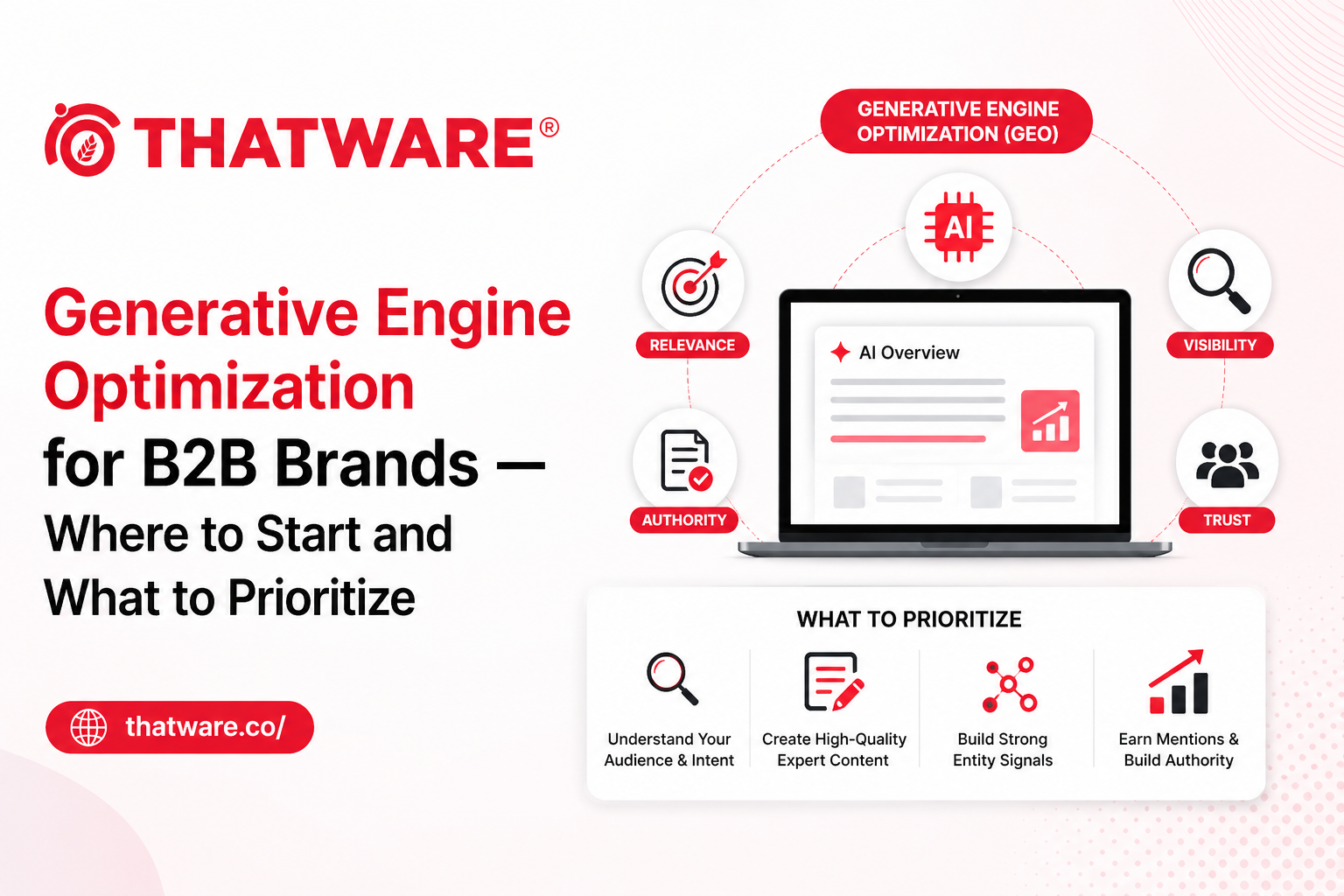
B2B brands have a specific GEO problem that consumer brands don’t face in quite the same way. The queries that matter most for B2B organic visibility are often complex, research-intensive, and comparison-heavy. “Best enterprise project management software for distributed teams” is not a query with a simple answer, and the AI-generated responses to queries like this are correspondingly nuanced, drawing on multiple sources and presenting synthesized evaluation rather than a simple recommendation.
Getting cited in these synthesized B2B responses requires meeting a higher bar than appearing in a simple informational overview. The content needs to demonstrate genuine subject matter expertise, provide specific and credible information, and establish the brand as a trusted source in the evaluative context that B2B buyers are using AI search to navigate.
This is harder than it sounds to do well, but it’s achievable with the right strategic prioritization.
Why GEO Matters Differently for B2B
B2B buying cycles are longer, involve more stakeholders, and involve more research than most consumer purchases. The AI search behavior that’s emerging in B2B reflects this. Buyers are using conversational AI tools to shortlist vendors, understand capability differences, get plain-language explanations of complex features, and sanity-check information they’ve gathered from other sources.
The brand that shows up consistently in these AI-mediated research moments has a significant awareness and credibility advantage over the brand that doesn’t. And because B2B research happens repeatedly across a buying cycle, that consistent presence compounds across multiple touchpoints.
The stakes in B2B GEO are higher than in many consumer categories because the value of a single converted customer is larger. If AI-mediated search is influencing which vendors make the shortlist for enterprise software purchases or professional service engagements, visibility in those AI responses has direct revenue implications.
Generative engine optimization services for B2B brands need to be built around the specific query types and evaluation criteria that B2B buyers are using AI search to investigate.
The Content Types That Get Cited in B2B AI Responses
B2B AI-generated responses tend to draw on a few consistent content types, and understanding these shapes where to invest content resources.
Comparison and evaluation content performs strongly in AI citation contexts. Content that specifically addresses how a product or service compares to alternatives, with specific criteria and honest assessment, is more likely to be drawn on for synthesized evaluation responses than promotional content that presents a one-sided view.
Use case and application content is another strong performer. Content that specifically addresses which types of customers or situations a solution is best for, with concrete examples and specificity, answers the kinds of qualification questions that B2B buyers are asking AI tools. Generic content about a product category without this specificity gets passed over.
Technical depth and specificity matter. B2B AI responses to technical questions tend to cite sources with genuine technical detail rather than high-level summaries. If your product documentation, technical blog posts, or implementation guides are more specific and accurate than competitors’, they’re more likely to be drawn on for technical queries.
Original research and data get cited heavily. If your brand produces original research, surveys, or benchmark data about your industry, AI systems find this highly citable because it’s specific, verifiable, and not available elsewhere.
Where to Start for B2B Brands
The starting point for most B2B brands approaching GEO is an audit of which queries relevant to their category are generating AI Overview responses, what content is being cited in those responses, and how their own content compares to what’s being selected.
This audit typically reveals a clear pattern. The content being cited tends to be more specific, more structured, and more directly responsive to the query than the brand’s existing content. The gap between what’s being cited and what the brand has is the optimization target.
Geo optimization agency partners that understand B2B contexts can run this audit efficiently and prioritize which content gaps represent the highest-value optimization opportunities given the brand’s specific competitive situation.
The Authority Dimension
B2B GEO is not just about content quality. It’s also about source authority in the specific domain the query covers. An AI system synthesizing an answer about enterprise cybersecurity solutions is going to weight sources that are recognized as credible in that specific domain more heavily than sources with general domain authority.
Building domain-specific authority for B2B GEO means being present and cited in the publications, communities, and knowledge sources that the AI systems recognize as authoritative for your specific category. This is where B2B digital PR intersects with GEO strategy.
Getting the brand’s perspective and expertise featured in industry publications, analyst reports, and community discussions relevant to the specific topic area builds the authority signals that support AI citation selection.
The Measurement Reality
Measuring B2B GEO performance requires acknowledging that the tooling is still developing. The most reliable approach currently involves systematic manual monitoring of AI-generated responses for priority queries, tracking which sources are cited, and monitoring changes over time as content improvements are implemented.
The business case for B2B GEO investment rests on the commercial value of the query types being targeted, not just the traffic volume. A brand that’s cited consistently in AI responses for enterprise software evaluation queries is influencing high-value purchase decisions even if the raw traffic numbers look modest compared to consumer categories.
The investment in getting this right is justified by the commercial stakes, and those stakes are high enough in most B2B categories that early movers will have a meaningful and durable advantage over competitors who haven’t prioritized it yet.