The world of sports infrastructure is evolving rapidly. From international stadiums to local training academies, the demand for high-performance sports surfaces has increased significantly. Among the most popular innovations in this industry is synthetic acrylic flooring, especially for tennis court flooring and multi-sports facilities. These modern flooring systems are not only durable and visually appealing but also designed to improve athletic performance and player safety.
As sports participation continues to grow worldwide, facility owners, schools, sports clubs, and government organizations are investing heavily in advanced sports infrastructure solutions that meet international standards.
Understanding Modern Sports Infrastructure
Sports infrastructure refers to the physical facilities and systems that support sports activities. This includes stadiums, indoor arenas, running tracks, basketball courts, badminton courts, tennis courts, and multipurpose sports complexes.
A well-designed sports facility plays a crucial role in:
- Enhancing athlete performance
- Reducing injury risks
- Improving audience experience
- Increasing durability and maintenance efficiency
- Supporting professional-level competitions
Modern sports infrastructure now focuses heavily on sustainable materials, weather resistance, and low maintenance requirements. This is where synthetic acrylic flooring has emerged as a preferred solution.
What is Synthetic Acrylic Flooring?
Synthetic acrylic flooring is a specialized surface coating system widely used in outdoor and indoor sports courts. It is created using acrylic resins mixed with silica sand and rubberized compounds to produce a strong, non-slip, and weather-resistant surface.
These flooring systems are highly popular for:
- Tennis courts
- Basketball courts
- Volleyball courts
- Skating rinks
- Multipurpose sports areas
The smooth finish and customizable texture make synthetic acrylic flooring ideal for professional and recreational sports facilities.
Advantages of Synthetic Acrylic Flooring
1. Excellent Durability
One of the biggest advantages of synthetic acrylic flooring is its long lifespan. The material is highly resistant to:
- UV rays
- Rainwater
- Extreme temperatures
- Surface abrasion
- Heavy player movement
This makes it perfect for outdoor sports courts exposed to changing weather conditions.
2. Enhanced Player Safety
Player safety is a major concern in sports infrastructure projects. Acrylic sports surfaces provide excellent grip and shock absorption, helping reduce slips and injuries during gameplay.
The cushioning effect also minimizes stress on joints and muscles, making it suitable for athletes of all skill levels.
3. Low Maintenance Requirements
Compared to traditional concrete or clay courts, synthetic acrylic flooring requires minimal maintenance. Regular cleaning and occasional resurfacing are enough to maintain performance and appearance.
Facility owners save both time and operational costs in the long run.
4. Professional Playing Experience
Modern acrylic systems are engineered to deliver consistent ball bounce, controlled speed, and better traction. This creates a professional-quality playing experience similar to international tournament courts.
Why Tennis Court Flooring Matters
Tennis is a high-intensity sport that demands precision, speed, and stability. The quality of tennis court flooring directly affects player movement and overall game performance.
Professional tennis facilities now prefer acrylic court systems because they offer:
- Uniform playing conditions
- Faster drainage after rain
- Reduced surface cracks
- Better visual aesthetics
- International-standard performance
Whether it’s a residential court, academy, school, or professional sports complex, choosing the right tennis court flooring can significantly impact court longevity and user satisfaction.
Types of Tennis Court Flooring
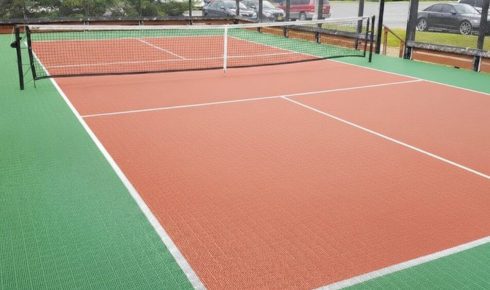
Acrylic Tennis Courts
Acrylic courts are among the most widely used tennis court flooring systems worldwide. They are cost-effective, durable, and suitable for all weather conditions.
Clay Courts
Clay courts are traditionally popular but require extensive maintenance and regular watering. They provide slower gameplay and higher ball bounce.
Synthetic Turf Courts
Synthetic turf courts mimic grass surfaces while offering better durability and easier maintenance compared to natural grass courts.
Cushioned Acrylic Courts
These advanced courts include additional cushioning layers beneath the acrylic surface to provide greater comfort and reduce player fatigue.
Growing Demand for Sports Infrastructure in India
India’s sports industry is witnessing rapid growth due to increasing government initiatives, private investments, and rising public interest in fitness and athletics.
Schools, universities, residential societies, and sports academies are increasingly adopting synthetic acrylic flooring for their sports facilities because of its:
- Cost efficiency
- Attractive appearance
- Weather resistance
- Long-term performance
The expansion of sports leagues and international tournaments has further accelerated the need for world-class sports infrastructure across the country.
Key Factors to Consider Before Installing Sports Flooring
Before selecting a sports flooring system, facility owners should evaluate several important factors:
Surface Usage
Different sports require different performance characteristics. Tennis courts need controlled ball bounce, while basketball courts require additional grip and impact absorption.
Weather Conditions
Outdoor courts must withstand rain, sunlight, and temperature changes. Acrylic flooring systems are highly effective in such environments.
Budget Planning
Initial installation costs, long-term maintenance, and resurfacing expenses should all be considered during planning.
Compliance with Standards
Professional sports facilities should comply with national and international sports regulations for dimensions, safety, and performance.
The Future of Synthetic Sports Surfaces
The future of sports infrastructure is becoming increasingly technology-driven. Manufacturers are now introducing advanced acrylic systems with:
- Eco-friendly materials
- Improved cushioning technologies
- Anti-fungal coatings
- Enhanced UV protection
- Faster installation processes
These innovations are transforming sports facilities into safer, smarter, and more sustainable environments.
Conclusion
The demand for advanced sports infrastructure is growing faster than ever, and synthetic acrylic flooring has become a key component of modern sports facility development. Its durability, safety features, low maintenance requirements, and professional performance make it an ideal solution for tennis court flooring and multi-sports arenas.
As sports culture continues to expand globally, investing in high-quality sports surfaces is no longer optional—it is essential. Whether for schools, academies, clubs, or professional stadiums, synthetic acrylic flooring provides the perfect balance of performance, aesthetics, and long-term value.