Water has a way of becoming part of the background. You use it to cook breakfast, rinse vegetables, wash clothes, clean the bathroom, and take a shower before heading out for the day. Most of the time, you don’t give it much thought. Then you notice stubborn white marks on the taps, an unpleasant smell from the kitchen sink, or soap that never seems to rinse away properly.
These small frustrations can be signs of water quality issues, although the cause isn’t always obvious. Sometimes the problem comes from hard water, sometimes from minerals or sediment, and occasionally from the plumbing itself. Whatever the reason, understanding what’s happening is a sensible first step toward finding a lasting solution.
Why Water Quality Matters in Every Room
Many homeowners focus exclusively on drinking water. That’s understandable, since nobody wants to worry about what’s going into their morning coffee or a glass of water after a long day. However, water is used throughout the house, and its characteristics can affect much more than taste.
Hard water, for instance, contains elevated levels of calcium and magnesium. Over time, these minerals can form scale inside pipes, water heaters, showerheads, and other appliances. The deposits may reduce efficiency and make cleaning more difficult. Iron can leave orange or reddish stains, while sediment may collect in faucet aerators and plumbing fixtures.
Taste and odor are separate concerns. Municipal water suppliers commonly use disinfectants to control harmful microorganisms, and some people notice a swimming-pool-like smell in their tap water. That doesn’t automatically mean the supply is unsafe, but it may indicate that a suitable treatment option could improve its taste or odor.
The important thing is to identify the actual issue instead of treating every water problem as though it has the same cause.
Understanding Whole-Home Water Treatment
A filter installed beneath the kitchen sink can be useful, especially when the main concern involves drinking and cooking water. But what about the water entering your washing machine, shower, dishwasher, and water heater?
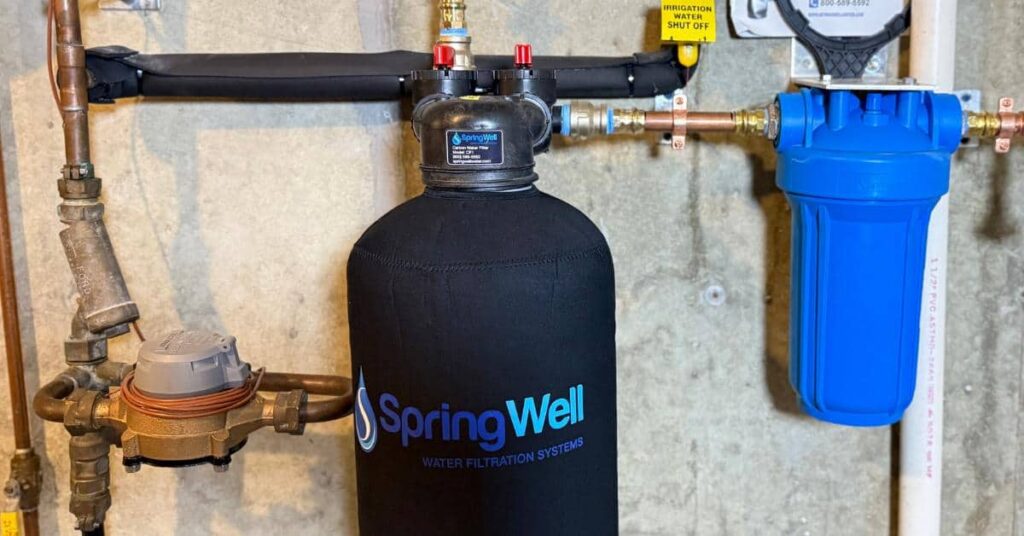
That’s where whole home water treatment may be worth considering. These systems are generally installed where the main water supply enters the property, allowing treated water to reach multiple fixtures throughout the house.
Depending on the household’s needs, a whole-home setup might include sediment filtration, a water softener, activated carbon treatment, or another suitable technology. The arrangement depends on the water source, test results, plumbing configuration, and the specific issues the homeowner wants to address.
Imagine a family dealing with recurring scale around bathroom faucets and reduced performance from its water heater. A drinking-water filter alone wouldn’t solve those problems. Testing might reveal that hardness is the main concern, making a properly sized water softener a more appropriate option.
On the other hand, a property experiencing sediment problems may benefit from a sediment filter. If several different issues are present, a combination of treatments could be necessary.
There isn’t one universal system that works perfectly for every home. The best solution is designed around the water entering the property, not simply the number of features listed on a product brochure.
How Different Filtration Systems Work
Water treatment technology can seem complicated at first, but the basic principles are fairly straightforward. Different filtration systems are designed to address different substances, and understanding their purpose makes comparing options much easier.
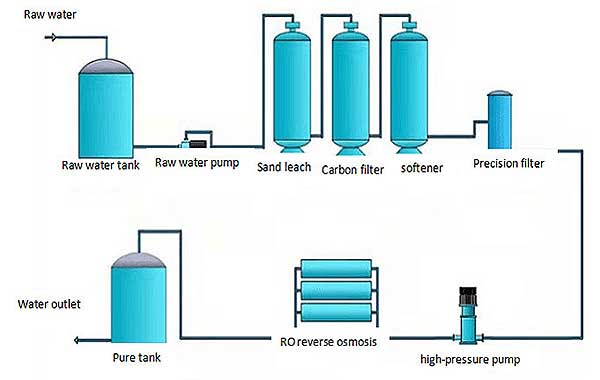
Sediment filters capture suspended particles such as sand, dirt, and rust. They’re often used as a preliminary treatment stage to protect downstream equipment from excessive particle buildup.
Activated carbon filters work differently. Their porous material can adsorb certain compounds, making them useful for reducing unpleasant tastes, odors, and some organic chemicals. Depending on the product’s design and certification, carbon filtration can also reduce particular contaminants.
Water softeners primarily address hardness minerals through an ion-exchange process. They can help reduce scale formation, but they aren’t general-purpose filters and don’t remove every contaminant.
Reverse osmosis systems use a semipermeable membrane to reduce many dissolved substances. They’re commonly installed at a dedicated drinking-water tap, although whole-house applications exist and require careful evaluation.
Before buying any system, check which contaminants it is certified to reduce and under what conditions it performs as claimed. A filter designed to improve taste should not automatically be assumed to remove bacteria, nitrates, lead, or other specific hazards.
Proper sizing matters, too. A system that cannot handle the home’s water demand may lead to disappointing performance, particularly when multiple showers, washing machines, or taps are being used simultaneously.
What About Chlorine in Tap Water?
Municipal water treatment plays an important role in protecting public health. Disinfection helps control disease-causing microorganisms as water travels through the distribution network. One commonly used disinfectant is chlorine, which helps maintain microbiological safety.
Some people, however, dislike the taste or smell associated with chlorine. If testing and local water information indicate that taste or odor is the main concern, an appropriately selected activated carbon filter may help reduce it.
It’s important not to confuse reducing chlorine with disinfecting water. Chlorine serves a useful purpose in public water systems, and removing it does not automatically make water healthier or safer. In fact, water quality needs to be assessed as a whole rather than judged by one characteristic.
If your water has a strong or sudden chemical smell, an unusual appearance, or a significant change in taste, contact your water supplier or a qualified professional to investigate. Don’t assume that a stronger smell simply means the water needs a filter.
For private wells, the situation is different because disinfection and monitoring practices vary. Testing should be selected according to the well’s conditions and local health recommendations.
Choosing a System That Fits Your Household
Before comparing prices, spend some time identifying your priorities. Are you mainly concerned about drinking-water taste, hard-water deposits, sediment, or several problems at once? How many people live in the home, and how much water is typically used each day?
A professional water test can help answer these questions. The results provide a clearer basis for selecting treatment equipment and avoiding unnecessary purchases.
Consider the practical details as well. Whole-house systems need adequate installation space, and some require drainage, electricity, periodic backwashing, or salt replenishment. Replacement cartridges and servicing costs should be included in the budget.
Ask providers to explain the expected maintenance schedule and the limitations of their recommendations. If a company promises that one device removes every possible contaminant, request specific performance documentation before making a decision.
It’s also wise to check product certifications from recognized independent organizations where applicable. Clear evidence is more useful than broad marketing claims.
Keeping Your System Working Properly
Even good equipment needs attention. Filters gradually collect particles or lose effectiveness, and softeners require periodic maintenance. Ignoring these tasks can reduce performance and, in some cases, create additional problems.
Follow the manufacturer’s replacement instructions, inspect visible connections for leaks, and keep records of servicing. If water pressure drops noticeably or the taste changes after installation, arrange an inspection instead of assuming the system simply needs more time to work.
Remember that maintenance and water testing serve different purposes. A recently replaced filter doesn’t prove that the water is free of every contaminant, while a satisfactory test result doesn’t mean equipment can be neglected.
A Practical Approach to Cleaner Water
Choosing a water treatment system doesn’t have to be an overwhelming project. Begin with the problem, confirm it through suitable testing, and select technology designed to address that particular issue. Consider the costs of installation and long-term maintenance rather than focusing entirely on the purchase price.
For some households, a simple drinking-water filter will be enough. Others may benefit from a combination of softening and whole-house treatment. What matters is making the decision based on reliable information.
Water touches nearly every part of daily life, from the kitchen to the laundry room. Taking time to understand its quality and choosing the right treatment can make household routines more convenient while helping protect plumbing and appliances for years to come.