A home tells you quite a lot about the people living in it. The books beside the bed, the well-used dining table, the favorite chair near a sunny window. These ordinary details reveal habits, interests, and little comforts that make everyday life meaningful.
That’s why designing a home should begin with understanding its inhabitants rather than immediately discussing furniture collections or fashionable color palettes.
Perhaps a homeowner wants more room for family gatherings. Maybe they’re looking for a peaceful retreat after demanding working days. Sometimes, they simply want their surroundings to feel more connected to who they are.
Whatever the motivation, a successful interior design experience brings personal preferences and practical requirements together through a carefully considered creative process.
Good Design Begins With a Meaningful Conversation
Before any materials are selected or floor plans developed, designers need to understand what homeowners genuinely want from their spaces.
There’s a lovely philosophy behind personalized interior design: every project begins with listening and ends with a space that feels like home. It recognizes that beautiful surroundings should reflect the people who experience them every day.
Imagine a couple renovating their living room. One enjoys entertaining friends, while the other prefers quiet evenings with a book. A thoughtful designer can accommodate both preferences through flexible seating, comfortable reading areas, and adaptable lighting.
These solutions emerge from meaningful conversations rather than assumptions.
Homeowners shouldn’t feel pressured to arrive with perfectly developed ideas. Sometimes, explaining what they dislike about their existing surroundings provides just as much useful information as sharing photographs of interiors they admire.
Listening creates the foundation for everything that follows.
Turning Initial Ideas Into a Practical Design Vision
Creative ideas are exciting, but translating them into a functional interior requires careful consideration.
The journey from consultation to interior installation typically involves understanding the property, developing design concepts, selecting materials, sourcing furniture, and bringing the individual elements together within the home.
During the early stages, designers might explore different furniture layouts, color combinations, and architectural improvements.
Consider a living room that feels rather dark despite having reasonably large windows. Instead of introducing brighter paint alone, the design might involve rearranging furniture, replacing heavy curtains, and incorporating reflective surfaces.
Several relatively simple decisions can produce a meaningful transformation when considered together.
Budget discussions also belong within these early conversations. Establishing realistic expectations helps homeowners make informed decisions without unnecessarily compromising their preferred aesthetic.
A clear design vision provides direction while leaving enough flexibility for interesting discoveries along the way.
Keeping Creative Decisions and Practical Details Connected
Behind every beautifully finished interior lies considerable organization. Measurements, material orders, supplier communication, contractor schedules, and furniture deliveries all require attention.
Effective interior design planning and coordination helps manage these interconnected responsibilities while maintaining consistency throughout the project.
Imagine renovating a bedroom with custom cabinetry, upholstered furniture, decorative lighting, and tailored window treatments.
Each element has its own requirements. Electrical arrangements may need confirmation before walls are finished, while cabinetry dimensions could influence furniture placement.
Overlooking these relationships can introduce unnecessary expenses and delays.
Careful coordination helps ensure that individual decisions contribute to the overall design rather than creating complications elsewhere.
It also allows homeowners to enjoy the creative experience without becoming completely absorbed in logistical responsibilities.
There will occasionally be unexpected challenges. That’s perfectly normal during a home transformation. Having a clear plan makes those challenges easier to manage.
Selecting Materials That Feel Right for Everyday Living
Materials bring personality into a home in ways that aren’t always immediately obvious.
A softly textured fabric can make a bedroom feel particularly inviting, while natural wood introduces warmth into contemporary interiors. Stone, ceramics, and understated metal finishes can provide interesting contrasts.
However, choosing materials requires more than appreciating their appearance.
A household with energetic children might need durable upholstery and easy-to-clean surfaces. Someone who enjoys cooking regularly may prioritize practical countertops and dependable cabinetry.
It’s always worth examining samples within your home before making final decisions.
Natural sunlight and artificial lighting can noticeably influence how colors and textures appear.
A fabric that looks pleasantly warm in a showroom might seem slightly different beside your existing flooring.
Taking the time to explore these details helps create interiors that remain enjoyable long after the initial excitement of renovation has passed.
Watching the Design Come Together
There’s something particularly satisfying about seeing an empty or unfinished room gradually develop its own character.
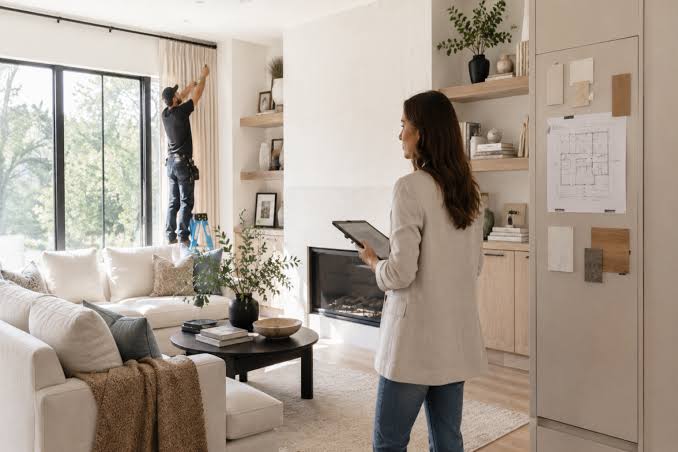
The furniture arrives, lighting fixtures are positioned, curtains are hung, and artwork begins finding its place.
This final stage provides opportunities to refine details that weren’t entirely apparent during planning.
Perhaps an accent chair needs repositioning to create a more comfortable conversation area. A decorative mirror might work better opposite a window, where it can reflect natural light.
Even small adjustments can influence the overall balance of the room.
Personal belongings deserve thoughtful placement, too. Family photographs, treasured books, inherited objects, and artwork collected over the years can bring authenticity into newly designed surroundings.
These familiar pieces help bridge the gap between a professionally designed interior and a genuinely personal home.
Creating Spaces That Grow Alongside You
A finished interior doesn’t need to remain unchanged forever. Families grow, routines evolve, and personal interests develop.
Thoughtfully designed spaces provide enough flexibility to accommodate these transitions without requiring constant renovation.
Investing in comfortable furniture, adaptable layouts, and quality materials can help create a lasting foundation for everyday living.
Ultimately, interior design isn’t simply about transforming the appearance of a property. It’s about improving the experiences that happen within it.
The peaceful mornings, spontaneous conversations, family dinners, and quiet evenings all deserve comfortable surroundings.
And when a design journey begins with genuine understanding, the finished result becomes something more meaningful than a beautifully decorated house. It becomes a place where you feel entirely yourself—a place that truly feels like home.