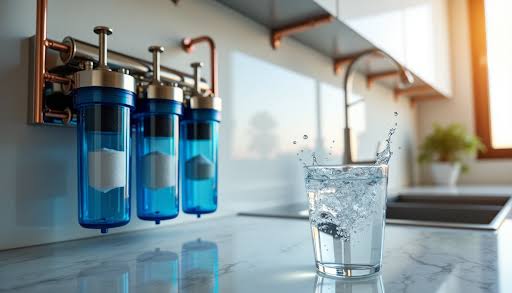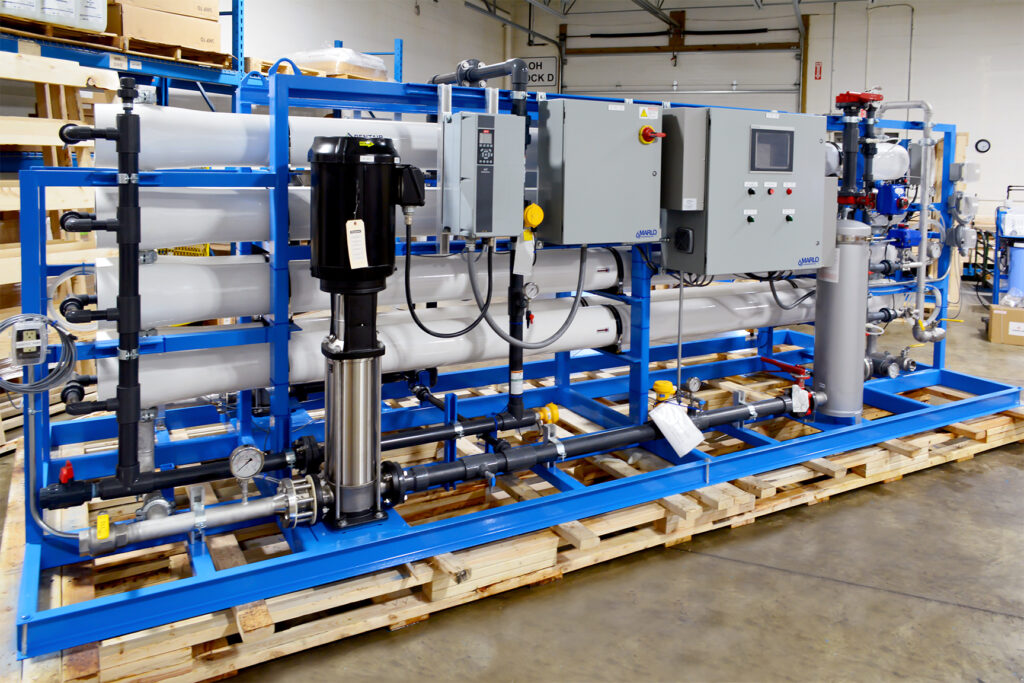
Water looks simple. It’s clear, familiar, and something most people barely notice during a busy workday. But for many businesses, the quality of that water can have a direct effect on equipment, production, cleaning, and the final product. When ordinary tap or process water contains too many dissolved minerals, things can get complicated surprisingly quickly.
A coffee shop might notice scale inside its machines. A laboratory may need water with very low ionic content. A manufacturing facility could have strict requirements for process water. Even a business that doesn’t work with water directly may depend on boilers, cooling equipment, or other systems that perform better when mineral buildup is kept under control.
That’s where deionization enters the conversation. It isn’t a solution every business needs, but for the right application, it can be extremely useful.
What Is Deionized Water?
Deionized water is water that has had many of its dissolved ions removed.
In a typical deionization process, ion-exchange resins capture positively and negatively charged ions in the water. The result is water with a much lower ionic content than ordinary tap water.
This matters because dissolved minerals can interfere with certain processes. They can leave deposits, affect chemical reactions, contribute to corrosion under particular conditions, or create unwanted residues.
The exact quality of deionized water depends on the equipment and process being used. Not every DI system produces the same result, which is why businesses should define their water-quality requirements before choosing a system.
Where Deionization Can Be Useful
Different industries have different reasons for wanting low-ion water.
Laboratories may need purified water for testing and analysis. Electronics manufacturers can use highly treated water during production and cleaning. Pharmaceutical and chemical operations may have carefully defined water specifications.
Even some industrial equipment can benefit from water with fewer dissolved minerals.
The key advantage of commercial water deionization is its ability to reduce ionic contaminants that may remain after more basic treatment methods.
However, deionization doesn’t necessarily remove everything from water. It is primarily aimed at charged ions. Depending on the application, a business may need pretreatment, reverse osmosis, activated carbon, filtration, or other technologies alongside DI.
That’s why system design matters so much.
Deionization Isn’t the Same as Filtration
This distinction gets overlooked.
A standard sediment filter works by physically capturing particles. Activated carbon targets certain chemicals and compounds. Reverse osmosis uses a membrane to reduce many dissolved substances. Deionization focuses specifically on ionic species.
These technologies can work together.
For example, pretreatment may protect the DI resin from substances that would otherwise consume its capacity too quickly. In some applications, reverse osmosis is used before deionization to reduce the mineral load entering the ion-exchange system.
The right combination depends on the incoming water and the required final quality.
There’s no universal recipe.
Why Water Quality Requirements Should Come First
Before purchasing equipment, determine how pure the water actually needs to be.
This sounds obvious, but businesses sometimes over-treat water simply because “purer” sounds better.
If a process requires a particular conductivity or resistivity level, specify that requirement. If the water is being used for equipment protection rather than laboratory work, the target may be completely different.
Once the target is clear, suppliers can recommend a system that matches it.
Otherwise, you may end up paying for treatment capacity you don’t need.
Resin Capacity and Regeneration
Ion-exchange resin doesn’t work forever.
As the resin captures ions, its capacity is gradually consumed. Depending on the type of DI system, the resin may need to be regenerated or replaced.
Businesses using significant quantities of deionized water need to understand this ongoing requirement.
For some facilities, replacement resin is delivered and used as part of a service arrangement. Others may have regeneration handled by a specialized provider.
Either way, resin management should be part of the original planning process, not something considered after the system is already installed.
Salt Delivery Can Be Part of the Bigger Picture
Commercial water treatment often involves more than one piece of equipment. If a facility also uses water softening, regeneration requires a supply of salt or another appropriate regenerant.
Reliable salt delivery can therefore become an important part of keeping treatment equipment operating consistently.
Running out at the wrong time isn’t exactly the sort of surprise a busy facility needs. A good supplier may offer scheduled deliveries based on estimated usage, which can make inventory easier to manage.
Businesses should also understand storage requirements and make sure salt or regenerants are kept in an appropriate location.
It sounds like a minor logistical detail. In practice, it can prevent unnecessary interruptions.
Maintenance Should Never Be an Afterthought
Water treatment equipment works hard, often every day and sometimes around the clock.
Resin eventually needs attention. Filters require replacement. Pumps, valves, tanks, controls, and other components can wear over time.
A proper service & maintenance plan can help keep the system performing consistently and may catch developing problems before they turn into expensive downtime.
Maintenance schedules should be based on actual equipment requirements and water usage. A low-use facility may need a different approach from a plant operating continuously.
Keep records of filter changes, resin replacement, water-quality measurements, and service visits. It makes troubleshooting much easier when something changes.
Watch the Incoming Water
The water entering a DI system can change over time.
Municipal water chemistry may vary seasonally. Well water can change after heavy rainfall or other environmental events. Changes in upstream treatment can also influence system performance.
Monitoring inlet water quality and final product water can help identify changes early.
Conductivity meters are commonly used in applications where ionic purity matters. Tracking these readings over time gives operators a practical way to see when treatment performance is beginning to decline.
Numbers can be much more useful than guesswork.
Don’t Forget About Downtime
For a commercial operation, downtime can cost more than the treatment equipment itself.
If deionized water is essential to production, consider what happens if the system goes offline. Is there storage capacity? Can another source provide temporary water? Does the service provider offer emergency support?
These questions are easy to ignore when everything is running normally.
They become very important at 2 a.m. on a production night.
A well-designed system should consider not just water quality but continuity of supply.
Choosing a Commercial DI Provider
When comparing providers, look beyond equipment specifications.
Ask whether they understand your industry’s water requirements. Can they test your water? Will they help size the system based on actual demand? Do they provide replacement resin or scheduled service?
Also ask about response times and spare parts.
The cheapest initial quote may not be the best value if technical support is difficult to obtain.
A reliable provider should be comfortable discussing both the technical side and the practical side of keeping the system running.
The Bigger Picture
Water deionization is a specialized form of treatment, but its value becomes clear when you look at what depends on water quality.
For some businesses, low-ion water is essential to production. For others, it helps protect equipment or maintain consistency. And for many facilities, it works as one part of a broader treatment strategy.
The smartest approach is not to chase the purest water possible. It’s to achieve the water quality your process actually requires, reliably and economically.
Start with testing. Define your target. Choose appropriate pretreatment. Plan for resin management, maintenance, supplies, and backup capacity.
Once those pieces are in place, water treatment stops being something you constantly worry about.
It simply does its job in the background — which, for a busy commercial operation, is exactly how it should be.